


As one of the information dissemination media, printed posters have a long history in the advertising industry. From early hand-painted posters to the application of modern printing technology, printed posters mostly rely on paper as the presentation carrier.
Entering the digital age, the presentation form of posters has changed—it is no longer limited to static paper but has developed towards a new digital form. The emergence of poster screens is a product of this trend.

Limitations of Printed Posters
In marketing campaigns, the task of a poster is simple and clear: to convey the brand’s core information through clever design, layout, and colors within a limited frame. However, this two-dimensional form of expression also has inherent limitations.

As the saying goes, "There are a thousand Hamlets in a thousand people’s eyes." The condensation and transmission of poster information mostly rely on the viewer’s subjective interpretation. Especially for creative posters with artistic styles, it is impossible to ensure that every audience can fully understand the profound meaning behind them.
In addition, static poster content is often overwhelmed by cluttered visual noise. In an environment of information overload, people are exposed to countless advertisements every day. Amid this dazzling flood of ads, static posters often fail to stand out.

Poster Screens: Breaking Limitations with Digital Technology
Compared with traditional printed posters, poster screens offer more comprehensive functions—they can display traditional static images as well as dynamic videos and animations.
The rich forms of expression eliminate the need for excessive condensation of advertising content. Through digital demonstrations, details can be focused on locally, making it easier for people to understand the connotation behind the poster.
From the perspective of communication effect, the human eye is inherently sensitive to movement. In a relatively static physical space, a screen playing dynamic advertising content forms a visual gravitational field that actively captures the audience’s attention.
The poster screen, as a medium, liberates posters from two-dimensional constraints. It retains the advertising nature of traditional posters while breaking through the limitations of their original form through digital technology, expanding the dimensions of advertising expression.
Posters Can Also Be Dynamic
In daily life, most people have long been accustomed to a multi-screen reading environment. From the endless feed on smartphones to the bullet comments on video platforms, dynamic and serialized information presentation methods have reshaped our visual habits.
Against this background, many posters have broken away from static forms and added dynamic effects to their content. Elements flip, accelerate, and move non-linearly in the frame, bringing more sensory stimulation.
In the past, such dynamic posters were mostly disseminated through mobile phone media. The poster screen, however, allows dynamic advertising content to be introduced into offline scenarios.
The poster content on the screen can feature colors that fade in and out like breathing, graphics that deform and reorganize, and text that appears word by word. This dynamic interpretation creates a richer visual experience.
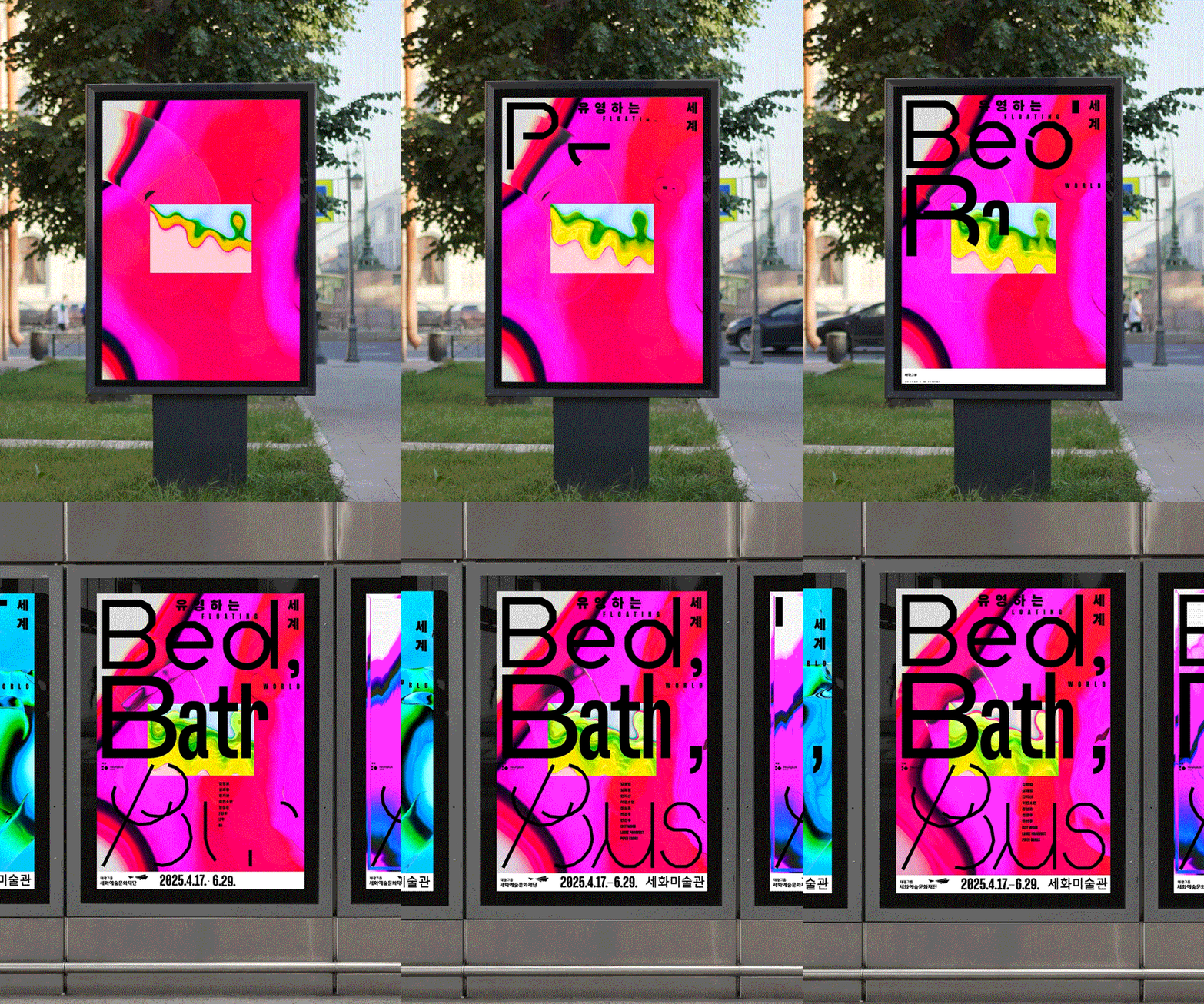
In offline scenarios, traditional posters are limited by the physical nature of paper, and the entire frame is like a frozen moment. Poster screens release the "flat surface" from this frozen state, allowing advertising content to flow in a way that is more in line with people’s visual habits.
Elevate Marketing to New Heights
In terms of marketing, compared with traditional printed posters, poster screens have a series of core advantages that paper media can hardly match:
1. Visual Traction: Create Visual Gravity
The primary principle of offline advertising is to be seen. In chaotic information environments, poster screens enhance visual impact through color changes, light effects, and animation elements, making ads more "dazzling."

High-end beauty brands understand this well. What they present on poster screens is often the texture of flowing liquids and the delicate luster of flying powder. This dynamic beauty is a tactile implication that printed posters can hardly convey.
2. Content Overlay: Expand Information Capacity
Once printed, traditional posters cannot be modified. Poster screens, however, are real-time editable, allowing for instant content updates—especially in occasions where information such as promotions and new product launches changes rapidly.
In terms of information density, poster screens can automatically cycle through different posters to display more content, even presenting multi-themed content in parallel.
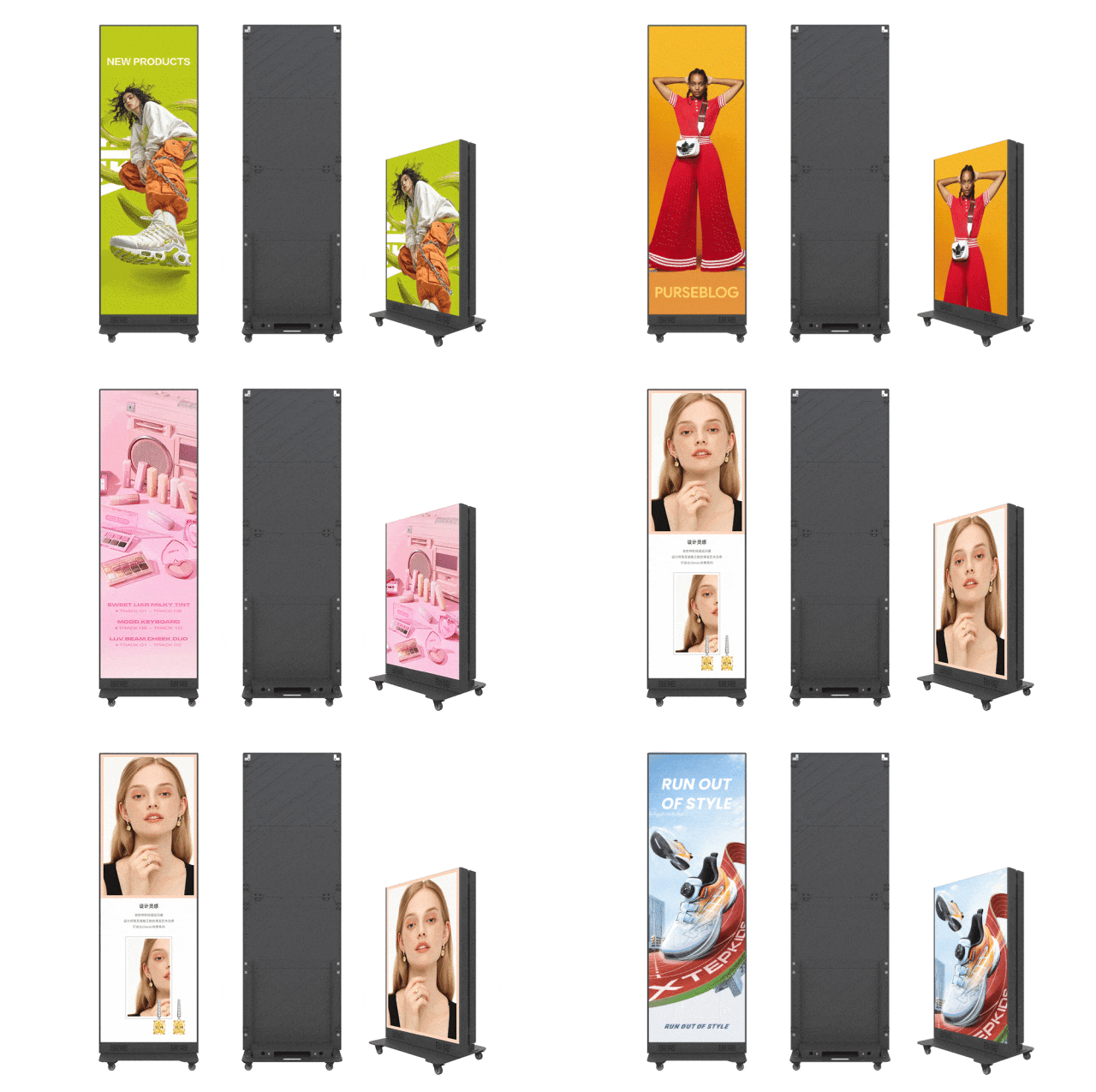
◎ iMGS LCD poster screens display posters of different product series within the same frame.
The essence of this change is a revolutionary expansion of information capacity. A printed poster can only convey one core message, while a single poster screen can automatically cycle through a carefully arranged "sequence of posters."
3. User Interaction: Engage Audiences with Content
The screen itself is also an interactive node that can engage with the audience. For example, technologies such as touch control, facial recognition, and voice interaction can be integrated into poster screens, allowing users to interact with the poster through touch, voice, or gestures.
When a poster becomes a touchable and sensitive screen, marketing transforms from a brand’s monologue into a dialogue with consumers.
The emergence of poster screens has broken the constraints of traditional printed posters, introducing digital technology and dynamic forms into advertising communication, and providing more form options for marketing.
The value of poster screens is not to completely replace printed posters— the latter still have value in specific low-cost and wide-coverage scenarios—but to open up new possibilities for the poster as a medium.
In the future, poster screens will not be isolated display terminals. Instead, as a nerve ending of brand promotion, they will connect data with mobile phones, social media, and even other smart devices, becoming a key touchpoint in the communication matrix.