

Walk down any supermarket aisle and you will notice something: most buying decisions happen right there, in front of the product. Research from POPAI puts this figure at around 70% — more than two-thirds of purchase choices are made at the point of sale, not before shoppers enter the store.
That single statistic should prompt every retail operator to ask a hard question: what is sitting on your shelves right now doing the persuading? A paper price tag? A printed card? These are passive tools in an active purchasing moment. Retail shelf screens — a category that sits within the broader world of retail digital signage — change that equation entirely. They put motion, colour, promotion, and real-time pricing exactly where the decision gets made, and the results in conversion data are hard to ignore.
This guide covers what shelf screens are, why traditional shelf labels are losing ground, how retail digital signage lifts conversion metrics, what to look for when sourcing shelf screens, and why working with a direct shelf screen manufacturer is the most cost-effective path for retail chains and brand owners.
6,000m² Production Factory | 400+ Classic Cases | 85+ Patent Certificates | 1,000+ Projects Worldwide |
What Is a Retail Shelf Screen?
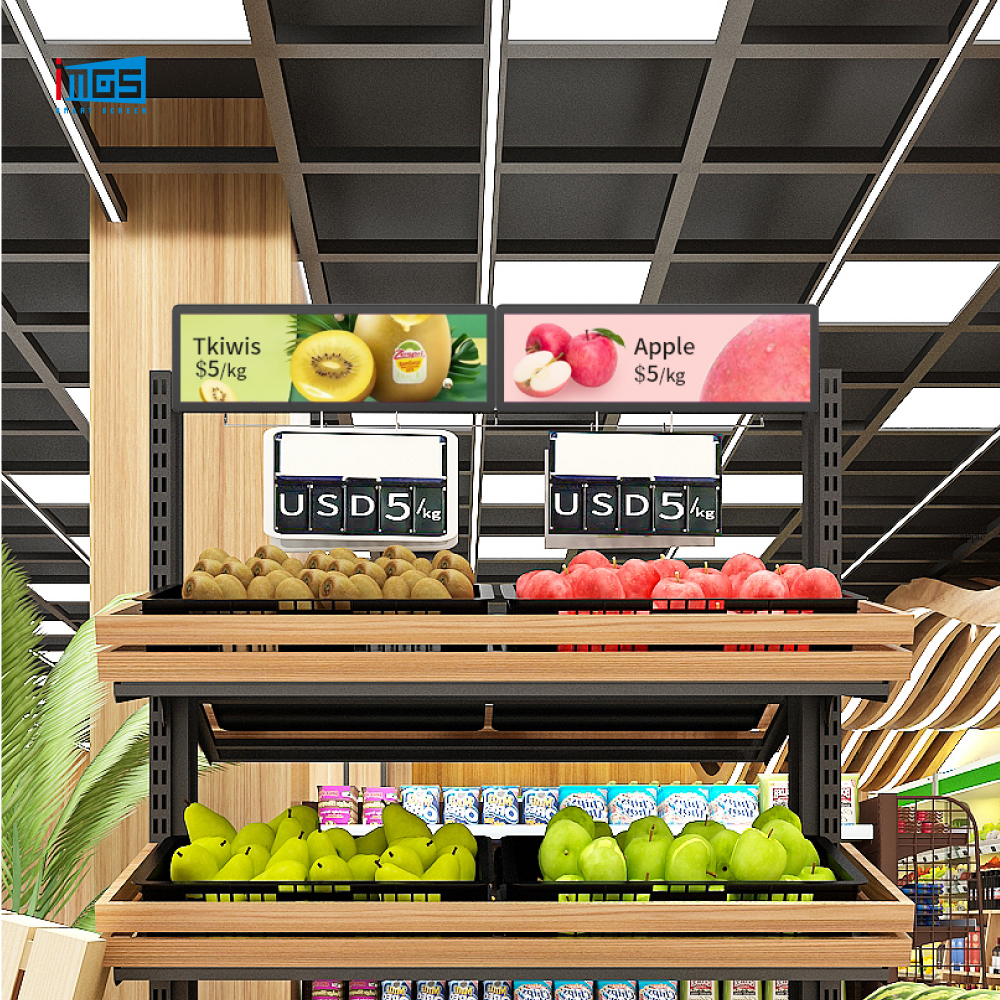
A retail shelf screen is a slim, high-brightness LCD panel mounted directly on or beside a product shelf — at eye level, where shoppers spend the most time looking. As a form of retail digital signage, shelf screens differ from wall-mounted or ceiling displays in one important way: they are placed at the moment of decision, within arm's reach of the product being promoted. They range from compact 7-inch strips that sit in standard shelf rails to wider 21.5-inch panels for end-caps and feature displays.
Most modern units connect to a central content management system via Wi-Fi or wired LAN, allowing store managers or brand teams to update pricing, promotions, and video content across hundreds of screens simultaneously — from a single dashboard. Installation formats include:
• Shelf-edge strips (replacing traditional paper price rails)
• Gondola-top screens facing the aisle
• Hanging panels positioned at shoulder or eye height
• End-cap displays for high-traffic promotional zones
Unlike large-format digital signage mounted on walls or ceilings, shelf screens place the message at the moment of decision — within arm's reach of the product being promoted.
iMGS Shelf Screen Slim-profile shelf-edge and gondola LCD screens built for supermarket and retail environments. Multiple sizes, high brightness, networkable for central content control. |
Why Static Shelf Labels Are Losing the Battle
Paper shelf labels and printed cards have served retail for decades. They work — up to a point. The problem is that modern retail moves faster than print can keep up with, and shopper expectations have shifted alongside it. Retailers investing in retail digital signage — including shelf-level screens — are widening the gap on competitors still relying on static print.
Pricing lags behind reality
Promotional pricing, competitor matching, and clearance markdowns can change daily or even hourly in high-volume categories. Print labels require staff to physically replace every affected tag across the store. In a 20,000 sq ft supermarket with thousands of SKUs, that is a significant labour cost — and errors are inevitable. Wrong shelf prices erode trust and sometimes create legal liability.
Static materials cannot compete for attention
Shopper attention in a busy aisle is fragmented. Motion catches the eye in a way that static print cannot. A screen displaying a 3-second promotional loop draws attention even from shoppers who were not specifically looking for that product category. That involuntary attention is where impulse conversion begins.
No path to personalisation or time-sensitive offers
Paper labels show the same message to every shopper at every hour. Retail shelf screens can show breakfast promotions in the morning, lunch deals at midday, and stock-clearance messages in the evening — all without anyone touching the shelf. Loyalty programme integration and QR code campaigns become practical at scale.
How Shelf Screens Increase Conversion — With Real Data
The case for retail shelf screens does not rest on theory. Several major retail deployments have produced documented conversion and revenue data worth examining.
70% of purchase decisions made at point of sale (POPAI) | +18% average order value lift reported in McDonald's digital menu deployments |
40% faster price update cycle vs. manual label replacement | 30%+ uplift in promoted category sales reported in Kroger digital shelf trials |
Case Study: Kroger — Digital Shelf Edge at Scale
Kroger, the largest supermarket chain in the United States, ran a multi-store pilot of electronic shelf displays in collaboration with Microsoft over several years. The programme, reported across retail technology media and the company's investor communications, targeted fresh food and high-margin grocery categories. The retailer documented faster promotional turnaround, reduced pricing errors, and measurable lifts in promoted-item sales — with category uplifts in the 30% range in select trials. The scale of the rollout confirmed that digital shelf technology works in high-traffic, high-SKU grocery environments, not just in smaller specialty retail.
Case Study: Carrefour — Real-Time Promotions Across European Stores
Carrefour has deployed electronic shelf displays across multiple European markets as part of its wider store digitisation programme. The focus has been on reducing the labour cost of price changes and enabling time-limited flash promotions that were previously impractical with print. Store managers gained the ability to activate chain-wide promotions from a central system within minutes. The operational saving alone — fewer staff hours spent on label changes — justified the capital expenditure at the chain level, with conversion improvements in promoted categories adding further return.
Both cases point to the same pattern: retail digital signage at the shelf level delivers measurable return in two ways — operational efficiency (less labour, fewer errors) and commercial performance (higher conversion on promoted lines). The shelf is where the sale happens; retail digital signage in that location has direct access to the purchase decision.
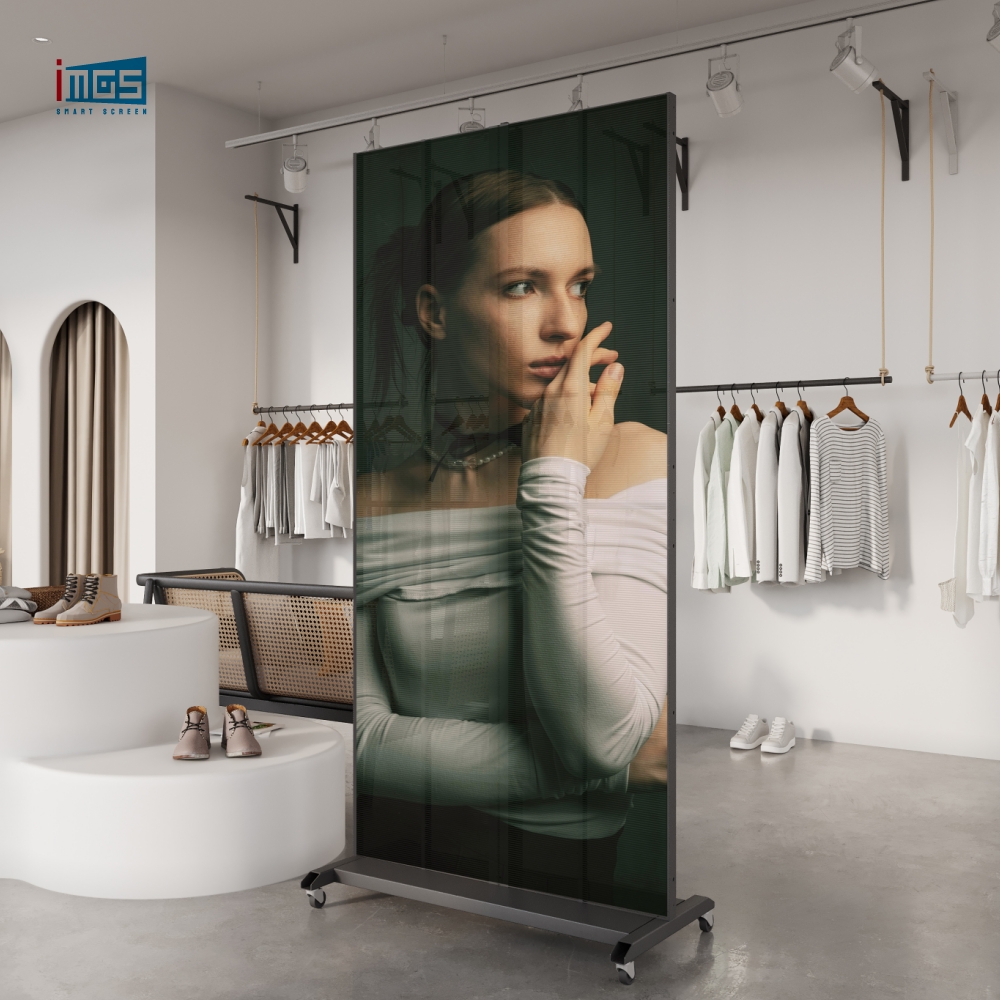
iMGS Retail Digital Signage Full range of retail-grade digital signage hardware — from shelf-edge screens to floor-standing displays — built for continuous commercial operation. |
Key Features to Look for When Sourcing Shelf Screens
Not every shelf screen on the market performs equally in a supermarket environment. Whether you are sourcing retail digital signage for a single flagship store or a 200-location chain rollout, these are the specifications that matter most for grocery and mass-market retail:
Brightness (nits)
Supermarket lighting is bright by design — ambient lux levels are high enough that a low-brightness screen appears washed out. Look for panels rated at 500 nits minimum for indoor retail; 700+ nits for well-lit food and beverage sections. Higher brightness also extends panel life in environments where screens run 12–16 hours daily.
Panel size and form factor
Shelf-edge applications typically use 7-inch to 13.3-inch stretched-format panels that fit standard shelf rails. End-cap and gondola-top positions can accommodate 21.5-inch to 27-inch standard-format panels. Match the screen size to the fixture depth and viewing distance — a screen that is too large for the shelf creates clutter rather than focus.
Network connectivity and CMS compatibility
The value of shelf screens comes from remote content management. This is where retail digital signage hardware separates from simple consumer displays — commercial-grade retail digital signage units are built with network management as a core function, not an afterthought. Confirm the hardware supports your preferred network protocol (Wi-Fi, wired Ethernet, or both) and that it is compatible with your content management system. Purpose-built commercial screens from a shelf screen manufacturer typically ship with proprietary or open-standard CMS support built in.
Operating hours and reliability rating
Consumer-grade screens are not built for retail duty cycles. Specify panels rated for 16/7 or 24/7 continuous operation — these use commercial-grade LCD panels and thermal management designed for long-run environments. Ask suppliers for MTBF (Mean Time Between Failures) data and warranty terms that reflect commercial use.
IP rating for fresh food and wet zones
In produce, dairy, and refrigerated sections, condensation and occasional water contact are real hazards. Screens deployed in these zones should carry at minimum an IP54 rating. Some shelf screen manufacturers offer IP65-rated panels for full wet-zone compliance.
iMGS Shelf Screen — Factory-Direct Hardware for Retail Chains
iMGS is a direct hardware manufacturer based in Xiamen, China, with a 6,000m² production facility. The company does not resell third-party panels — every shelf screen and retail digital signage unit in the iMGS range is designed and built in-house, which has direct consequences for pricing, lead times, and customisation. For retail chains sourcing retail digital signage at volume, working with a direct manufacturer rather than a distributor removes a significant cost layer.
Why source direct from a manufacturer?
• Factory pricing without distributor margin — relevant for retail chains deploying screens across dozens or hundreds of locations
• OEM and ODM options — custom bezel colours, branding, and screen sizes are practical when you are buying at volume
• 100% factory testing before shipment — each unit is run through QC on the production line
• Direct access to engineering — specification queries and custom requirements go to the team that builds the product
iMGS holds 85+ patent certificates and has completed 1,000+ projects across global retail, F&B, and commercial environments. The shelf screen range covers standard gondola formats, stretched shelf-edge panels, and transparent display units for refrigerated sections.
For retail buyers, brand owners, and AV integrators evaluating shelf screen technology, iMGS offers sample units and detailed specification sheets on request. The shelf screen product page lists current models with full panel specifications.
The full hardware range — including desktop digital signage, floor-standing kiosk displays, and interactive advertising displays — gives retail operators a single manufacturer source for a complete in-store digital network.
Learn more about iMGS production capabilities and quality standards on the shelf screen manufacturer about page.
Ready to Upgrade Your Retail Displays? Contact iMGS directly for factory pricing, custom specifications, and sample units. ⭐ irenepan@fj-imgs.com ⭐ +86-18850151946 |