


In British writer Somerset Maugham's novel The Moon and Sixpence, there is a classic expression: We are all bent over picking up sixpence, but forget to look up at the moon in the sky.
Interestingly, the ceiling in commercial spaces is like the moon in Maugham's writing—it clearly occupies the upper half of our field of vision, yet is rarely truly noticed.
Until the emergence of sky screens, which have largely brought this area back into people's attention.
Part I: The Redefined Skyline
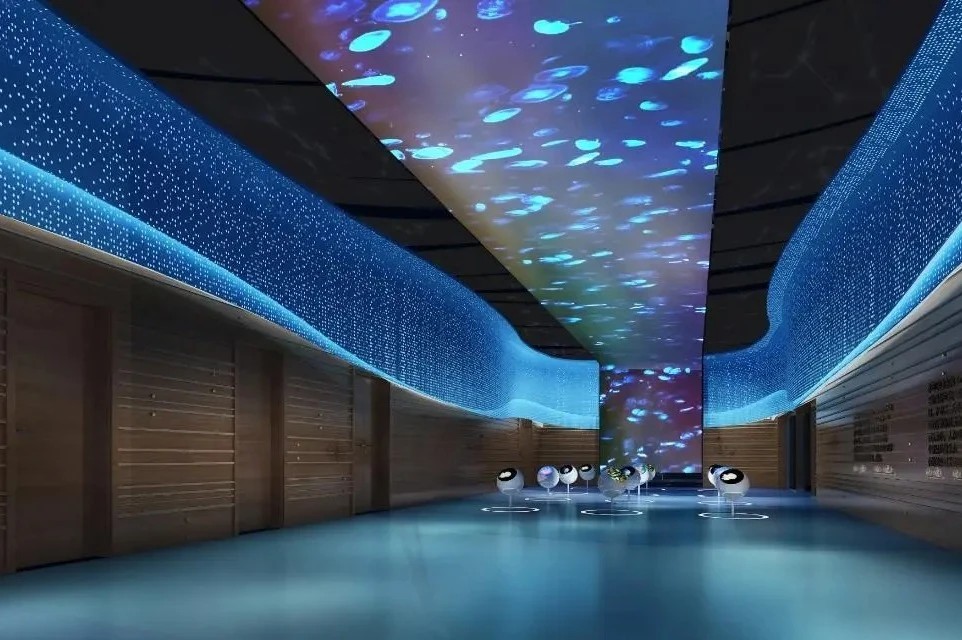
The ceiling, as the fifth facade of a space, has traditionally been treated mostly with blank space, adorned with a few chandeliers or lines as common practice. Sky screens break this fixed pattern, transforming the ceiling into a digital interface capable of carrying infinite imagination.
Dynamic Digital Firmament
When you step into a commercial complex and look up at the dome, you may be awed by a giant sky screen: brilliant galaxies flow slowly overhead, splendid flower seas bloom before your eyes, and virtuality and reality merge at this moment. This is the sky screen.
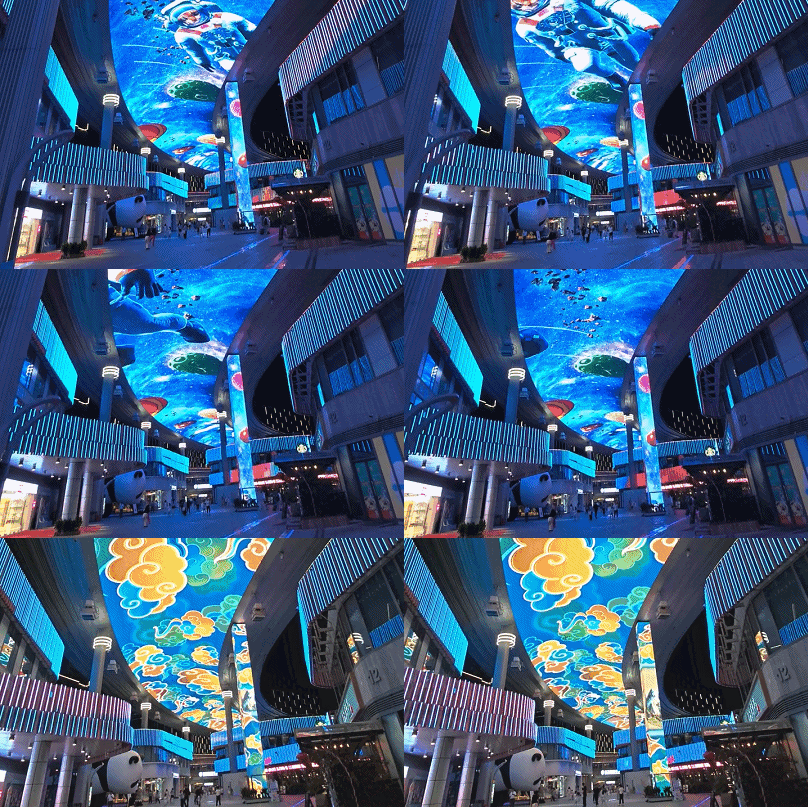
Unlike traditional upright display screens, sky screens intervene in space with an overlooking posture, suspended above hotel lobbies, shopping centers, city squares, and even large stages.
The value of sky screens lies in transforming redundant ceiling space into a variable visual field while preserving sufficient spatial height.
This screen overhead is redefining the ceiling of commercial spaces: it gives the originally blank dome the ability to change dynamically, becoming a content interface that can be edited in real-time.
Part II: How Is the "Looks Ceiling" Achieved?
From a technical perspective, sky screens are not simply inverted displays—they need to strike a balance between high image quality, integrity, and lightweight design.
High Resolution: Exquisite Beauty Up Close
Unlike outdoor large screens viewed from afar, sky screens are often suspended in indoor ceiling spaces, with viewers possibly standing just a few meters directly beneath the screen. If the pixel grains are too coarse, looking up would reveal only blurry color blocks, completely destroying the sense of immersion.
Based on this, sky screens mostly adopt high-density small-pitch technology, using extremely high pixel density to eliminate graininess, making exquisite image quality accessible up close.
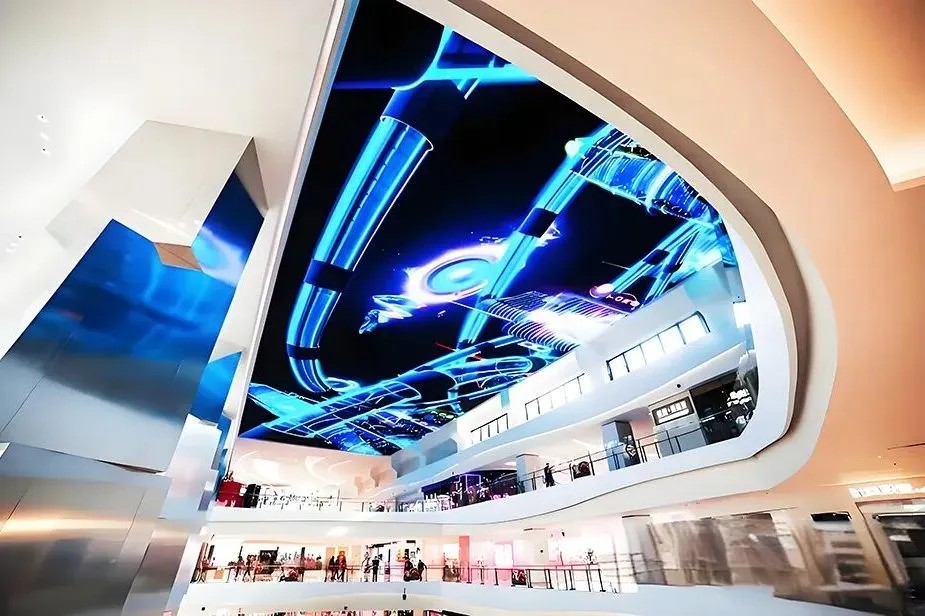
Considering that viewers watch from different angles looking up, sky screens also need to ensure that color and brightness remain consistent under an ultra-wide viewing angle of nearly 180°, without color shift or attenuation, truly achieving that wherever you stand, you are in the visual C-position.
Seamless Splicing: A Perfectly Integrated Picture
A sky screen is composed of hundreds or thousands of modules spliced together, and physical gaps inevitably exist between modules.
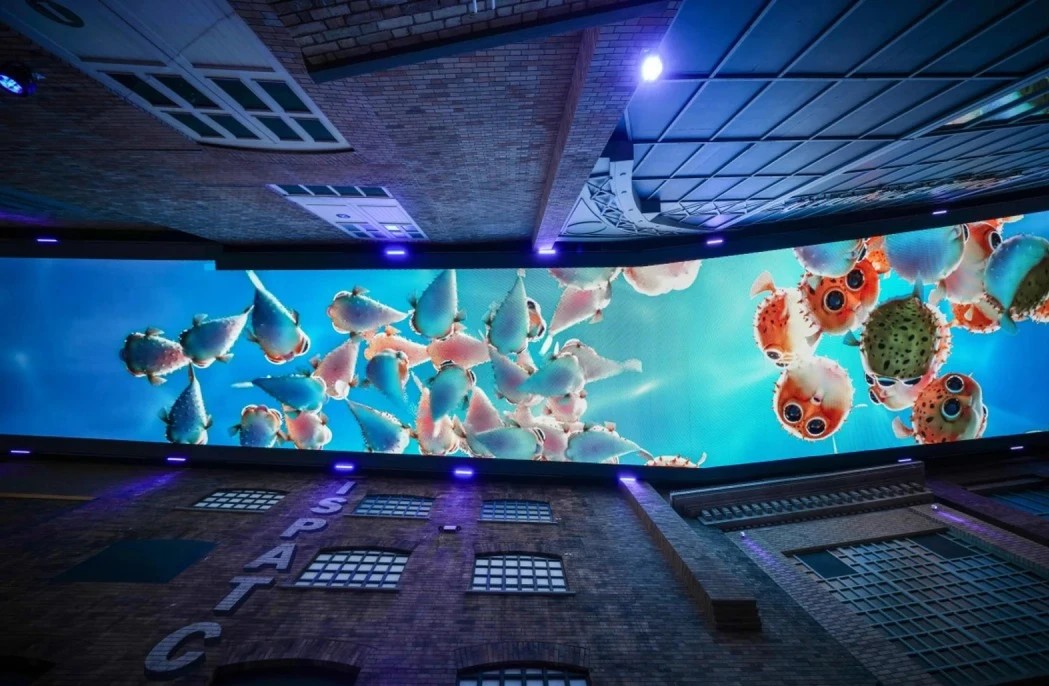
Seamless splicing technology compresses physical gaps to near zero through pixel-level point control, combining independent display units into a naturally integrated whole, ensuring visual integrity in the picture.
More importantly, this technology gives sky screens strong spatial adaptability: using customizable modular units, the screen can precisely fit various irregular domes like a jigsaw puzzle, achieving boundless integration between screen and environment.
Lightweight Structure: Reducing Screen Load
Sky screens are typically suspended from ceilings. When the display area expands to hundreds of square meters, the overall load can reach dozens of tons, posing a severe challenge to the building's load-bearing structure.
The introduction of all-aluminum die-cast cabinets and carbon fiber composite frames allows sky screens to maximize the removal of redundant materials while ensuring overall rigidity, reducing weight to approximately 30% of traditional screens, facilitating suspension installation and reducing the building's load-bearing burden.
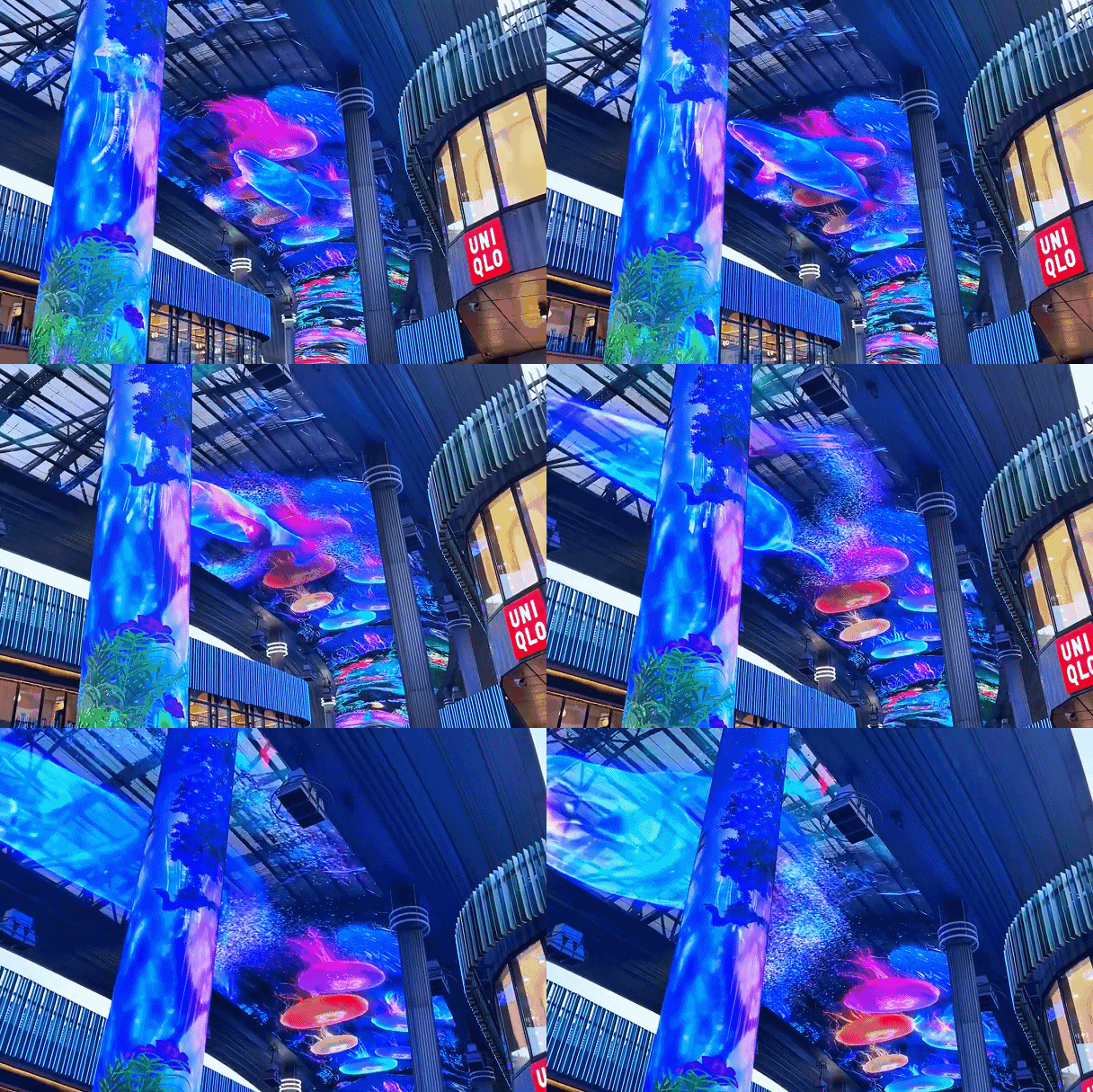
The environment where sky screens are located fundamentally differs from traditional screens. Beyond conventional display capabilities, their technical focus needs to consider how to better exist and coexist within specific spaces.
Part III: Different Scenarios, Different Priorities
In commercial scenarios, screen technology always serves the relationship between people and space. For different domains, sky screens demonstrate various distinctive application forms.
Shopping Mall Corridors: Carriers of Public Art Installations
In the past, shopping mall corridors were merely functional circulation channels. The intervention of sky screens has transformed the ceiling space into a perceivable public art installation.
It can change visual themes according to festivals, play creative animations linked with brands, or even respond to ground interactive installations.
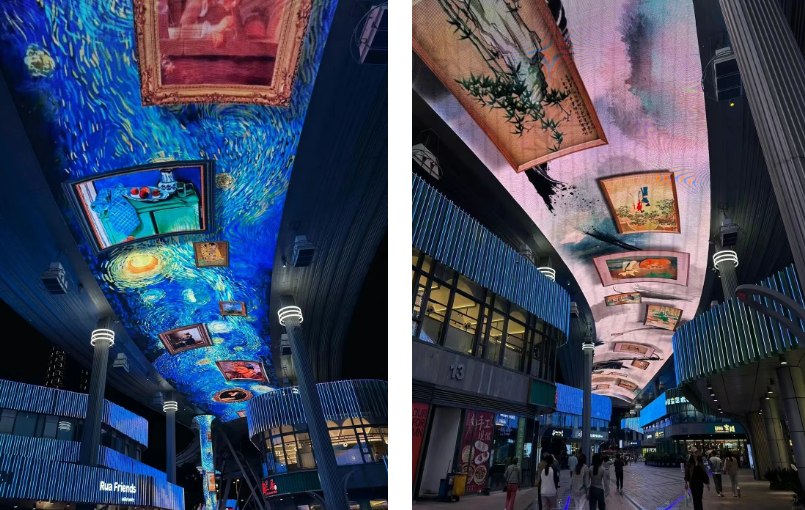
This form not only beautifies the commercial interface but also extends customers' dwell time, turning the shopping experience itself into an immersive visual journey.
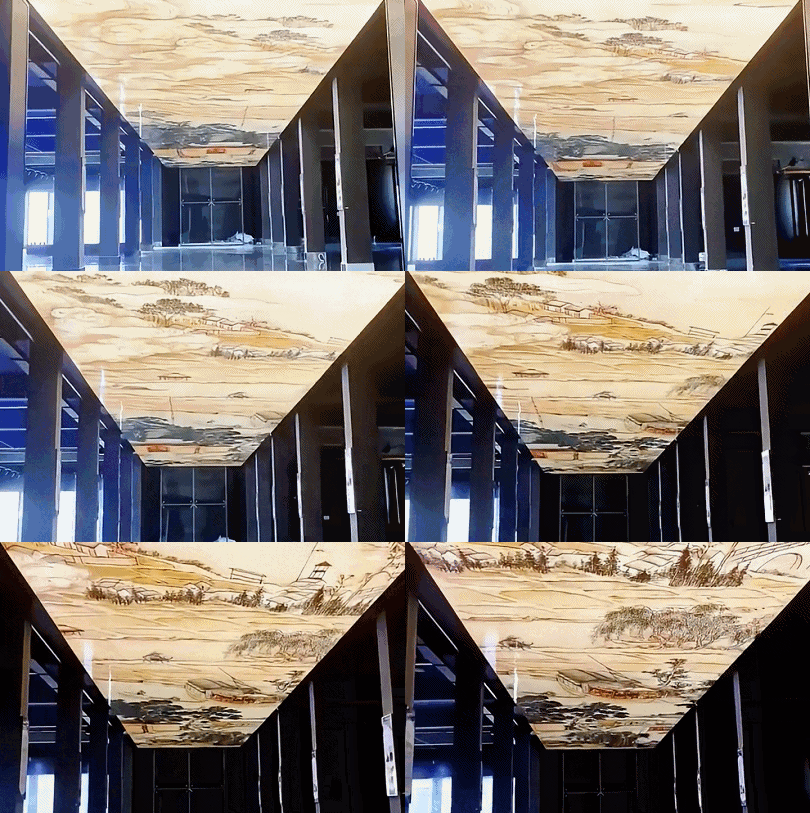
Cultural Tourism Landscapes: Perceivable Cultural Immersion
In ancient towns, cultural parks, or theme parks, sky screens become narrative carriers that activate culture. When tourists look up, what greets their eyes are concrete historical scenes.
This immersive experience transforms culture from static text explanations into enveloping sensory resonance. Culture, therefore, becomes vibrant and alive.
Exhibition Displays: Enveloping Visual Narratives
In science and technology museums, brand showrooms, or large-scale launches, traditional display methods often face the limitation of one-way information transmission. The addition of sky screens completely changes this situation.
It collaborates and coordinates with other facade screens to jointly construct an enveloping narrative space, drawing viewers into the core field of the story, allowing information to be transmitted in a more infectious manner.
Sky screens are redefining the visual dimension of commercial spaces—they integrate into environmental atmosphere, expand sensory boundaries, create immersive experiences, and transform the originally fixed physical interface overhead into a window connecting reality and imagination.
As immersive experience becomes an important direction in the evolution of commercial spaces, this trend also makes the ceiling area represented by sky screens a crucial piece of the puzzle in constructing overall perceptual experiences.