

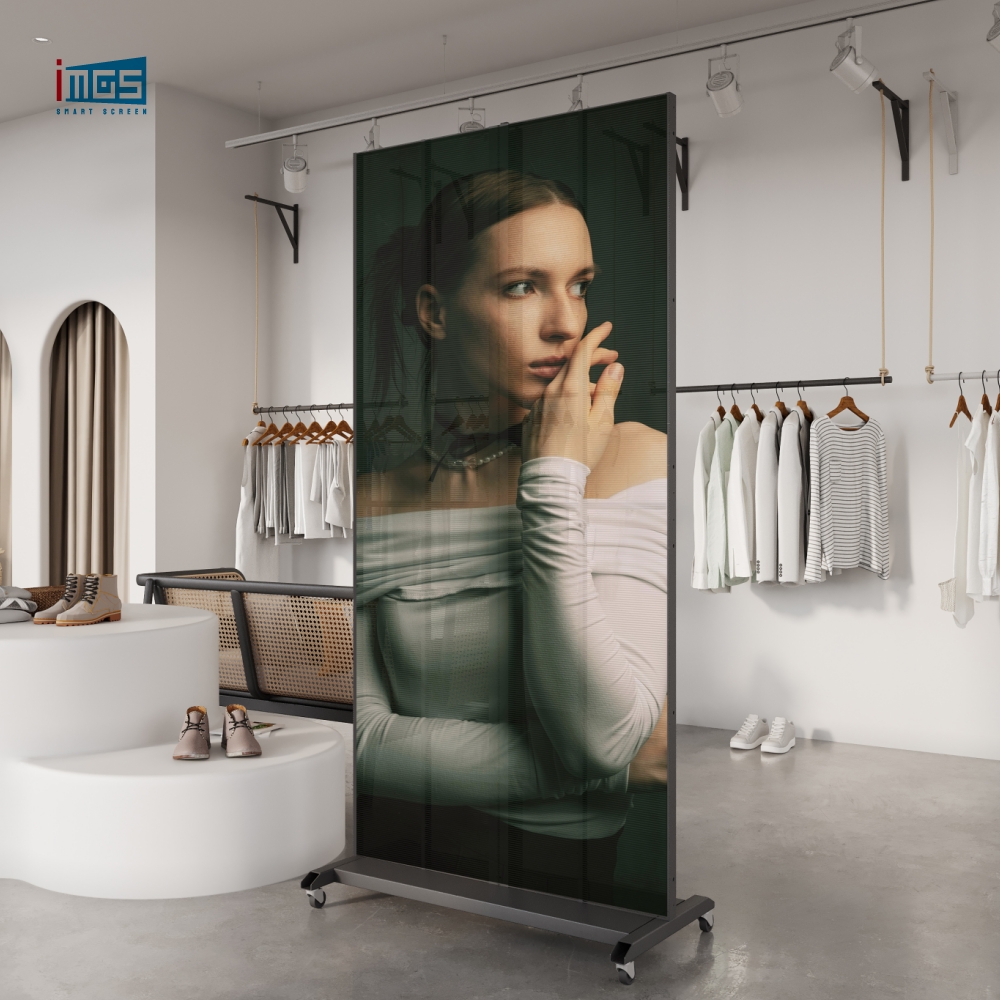
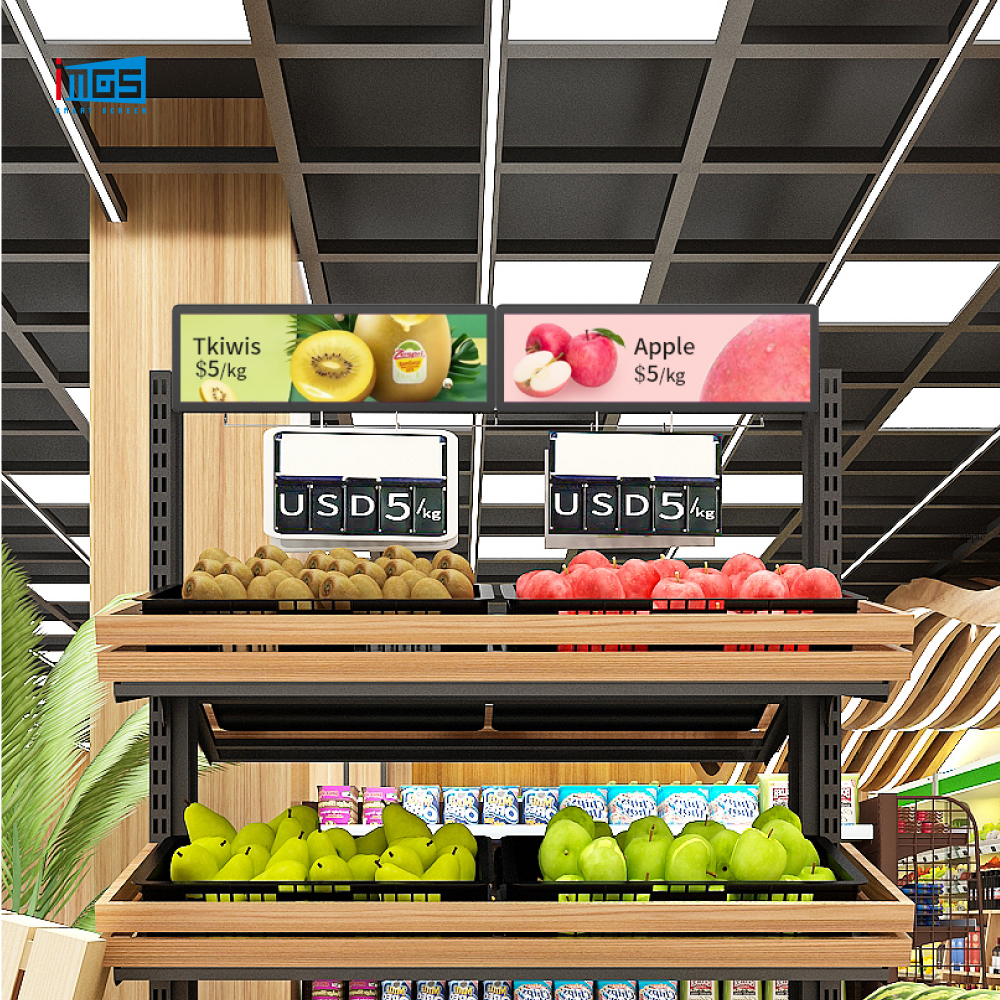

Walk into any modern supermarket, pharmacy, or electronics chain and you'll notice something has changed at aisle level. Paper shelf labels and static promotional cards are giving way to slim digital panels mounted directly on gondolas and product racks. Shelf screens are no longer a luxury fixture for flagship stores — they're fast becoming the default for any retailer serious about dynamic pricing, targeted promotions, and real-time inventory messaging.
Yet buying the wrong shelf screen is an expensive mistake. A panel that draws too much power inflates utility bills across hundreds of stores. A unit with the wrong mounting system means costly retrofits. And a screen too large — or too small — for your gondola simply gets ignored. This guide breaks down the three decisions that matter most for retail digital signage buyers: screen size, power consumption, and installation method. We compare the main options, explain the trade-offs, and show you what to look for when sourcing retail digital signage from a direct manufacturer.
6,000m² Production Factory | 400+ Classic Cases | 85+ Patent Certificates | 1,000+ Projects Worldwide |
Why Shelf Screens Are Replacing Paper Labels
The numbers behind this shift are hard to argue with. The global retail digital signage market was valued at USD 5.89 billion in 2025 and is forecast to reach USD 7.86 billion by 2030, according to Mordor Intelligence. Shelf-level screens are one of the fastest-growing segments within that figure — and for good reason.
USD 6.4B | Global retail digital signage market in 2024 (market.us) |
12.7% | CAGR forecast 2025–2034 for retail digital signage |
40% | Longer customer dwell time near high-margin aisles with digital screens (Mordor Intelligence) |
34,000+ | Shelf-edge screens activated by Walmart, Carrefour & AEON across 2,100 stores (Shopper Experience Consortium, 2024) |
Paper labels are updated overnight, at best. A shelf screen manufacturer can push a price change or promotional swap within minutes, from a single dashboard. For retail chains running hundreds of locations, that responsiveness is the core business case — not the screen itself.
Sub-32" panels now account for a meaningful share of the retail digital signage market, specifically because shelf-edge placement calls for compact, cost-efficient displays. According to Grand View Research, the below-32-inch display segment was valued at USD 6 billion in 2024, driven largely by shelf-level retail deployments.
Screen Size & Form Factor: Which Panel Fits Which Shelf?
Shelf screens come in a narrower size range than most retail digital signage categories. You're not working with 55-inch canvases here — gondola rails, shelf edges, and product bays constrain you to specific widths and heights.
7" – 10.1" Panels: Shelf-Edge Price Tags & SKU Messaging
These are the smallest shelf screen units, designed to sit at the front edge of a shelf tier. At 7 to 10.1 inches, they show one product's price, promotion, or short video loop. They're lightweight, easy to replace, and draw minimal power. The trade-off: visibility drops off sharply beyond about 1.5 metres, so they work best at eye level or in close-browse categories like cosmetics, electronics accessories, or wine.
13" – 21.5" Panels: Category Endcaps & Mid-Shelf Promotions
This is the most versatile range for retail digital signage at the aisle level. A 13-inch panel can sit horizontally on a mid-shelf bracket to serve a small product category; a 21.5-inch panel mounted vertically on a gondola end becomes a proper promotional unit visible from 3–4 metres. Retailers in grocery, pharmacy, and fashion use this range most heavily because it balances visibility with footprint.
27" – 32" Panels: Feature Displays & Premium Product Bays
Larger shelf screens in the 27–32-inch range are typically reserved for high-margin categories: premium spirits, luxury skincare, or consumer electronics where detailed product information earns its space. These panels can display full video, comparison specs, or AI-assisted product advisors. Power draw and cable management become more important factors at this size.
A shelf screen manufacturer like iMGS supplies panels across all three size bands, with standard and custom form factors available for OEM buyers. If your planogram has unusual bay dimensions, factory customisation is more practical than forcing a standard panel to fit.
| iMGS Shelf Screen Range Multiple size options from 7" to 32". Android OS, CMS-ready, designed for gondola and bracket mounting in retail environments. |
Power Consumption: What the Numbers Actually Mean for Multi-Store Operators
Power consumption might be the least glamorous spec on a retail screen datasheet, but for a chain running 500 stores with 20 screens per store, a 10-watt difference per panel translates directly to operating costs.
Typical Wattage by Panel Size
Shelf screen power draw varies by size, backlight technology, and whether the panel runs a media player internally or pulls from an external source. As a general guide: 7–10.1-inch panels typically draw 8–15W; 13–21.5-inch panels range from 18–35W; 27–32-inch units commonly run at 35–60W depending on brightness settings.
Always-On vs. Scheduled Operation
Most retail digital signage deployments run screens during store hours only, typically 12–16 hours per day. A 20W panel running 14 hours daily consumes roughly 102 kWh per year — multiply that by 10,000 screens and energy becomes a meaningful procurement factor. CMS platforms that support scheduled on/off times are therefore standard practice for multi-site operators.
PoE Displays: Simpler Cabling, Lower Install Cost
Power-over-Ethernet (PoE) shelf screens run both power and data through a single network cable. For shelf-edge applications, this eliminates the need to route mains power to individual bays — a meaningful installation saving in existing stores where electrical points aren't close to every gondola. PoE draw is capped at around 25W under the 802.3af standard, which suits panels up to roughly 15 inches.
When comparing specifications from a retail digital signage shelf screen manufacturer, check whether wattage figures are for typical operation or peak load. Panels with high-brightness modes can draw significantly more power than their rated average when displaying white or light-heavy content.
Installation Methods: Rail Mount, Clip-On & Embedded Compared
The installation method determines how quickly you can deploy, how easily you can reposition screens as planograms change, and what your maintenance workflow looks like when a panel needs replacement.
Rail Mount Systems
Rail mounts attach a horizontal track to the front lip or side upright of a gondola bay. Shelf screens then slide into the rail and lock in place. This is the most common installation for permanent or semi-permanent retail digital signage because it keeps panels level, allows horizontal repositioning without tools, and accommodates cable routing within the track channel. Rail systems work across most standard gondola manufacturers including Lozier, Madix, and equivalent European formats.
Clip-On & Bracket Mounts
Clip-on mounts grip directly to a shelf edge or upright without modifying the gondola structure. They're faster to install and remove, which makes them popular for promotional campaigns or seasonal displays. The downside is less rigidity — clip-on panels can shift when shelves are restocked, which matters if your retail digital signage content is position-sensitive (like a screen that's meant to face a specific product bay).
Embedded / Integrated Shelf Units
Some retailers spec new gondola units with screen channels built in from manufacture. This gives the cleanest look — no visible brackets, integrated cable management — but it commits you to a fixed screen size and position. Embedded shelf screen units are more common in new-build store fits than in retrofits. They're worth considering if you're fitting out a new store format and want a consistent retail digital signage aesthetic across all bays.
Whatever installation method you choose, confirm the mount's weight rating against your panel spec, and check whether the shelf screen manufacturer provides bracket hardware or whether you source it separately. iMGS supplies mounting hardware matched to each panel model, reducing compatibility issues on-site. Choosing the right combination of mount and retail digital signage panel up front avoids costly retrofits down the line.
| iMGS Interactive Advertising Display 75" interactive screen for retail feature walls and high-visibility endcap installations. Ideal for premium product categories. |
Brand Case Studies: What Shelf Screens Deliver in Practice
Walmart & Carrefour: Shelf-Edge Scale
According to the Shopper Experience Consortium's March 2024 census, Walmart, Carrefour, and AEON collectively activated more than 34,000 shelf-edge screens across 2,100 stores. These screens push updated planogram data through 5G gateways every eight minutes, giving regional managers the ability to change seasonal bundles during the day rather than waiting for overnight crews. The operational saving in print and labour alone justified deployment in the first 18 months for several of those chains.
General Retail: Dwell Time & Sales Lift
Mordor Intelligence's 2025 retail digital signage report cites placement near high-margin aisles as extending customer dwell time by up to 40%, directly contributing to category sales increases. In fashion and apparel — the largest single segment of the retail digital signage market in 2024 with 28.9% share — shelf-level and rail-mounted retail digital signage showing styling content drove measurable attachment rate improvements in A/B tested store formats. Grocery chains report that dynamic pricing on retail digital signage panels in produce sections cut markdown waste by reducing the lag between price decisions and shelf updates.
Specs Checklist Before You Buy
Use this checklist when evaluating retail digital signage and shelf screen options from any manufacturer:
• Panel size matches your gondola bay width and viewer distance (7"–10.1" for close-browse; 13"–21.5" for standard aisles; 27"–32" for feature bays)
• Brightness rating — 400–500 nits is standard for indoor retail; look for 700+ nits if screens face windows or in high-ambient-light stores
• Wattage at typical operation (not peak) — compare across your full screen count for annual energy cost
• OS and CMS compatibility — Android is standard; confirm your CMS platform's certification list
• Mount type and gondola compatibility — rail, clip-on, or embedded; check weight ratings
• Warranty and support terms — commercial-grade panels should carry at least a 2-year warranty with defined replacement SLA
• OEM/ODM availability — if you need custom dimensions, logos, or bezel colours, confirm the manufacturer supports this
Why Source Shelf Screens from iMGS Direct
Most shelf screen buyers purchase through distribution channels, which adds margin at each step and removes direct access to factory customisation. iMGS is a direct shelf screen manufacturer and retail digital signage supplier — not a reseller, not a software company — operating from a 6,000m² production base in Xiamen.
That matters for several practical reasons. Factory pricing removes distributor margin, which is material when you're buying hundreds of units. OEM and ODM services are available for buyers who need custom sizes, branding, or hardware modifications. Every unit goes through 100% pre-shipment testing, backed by 85+ patent certificates across display hardware and mounting systems.
For system integrators and AV distributors sourcing retail digital signage, working with a shelf screen manufacturer directly means faster spec resolution, cleaner supply chains, and the ability to prototype custom form factors before committing to volume orders. Retail digital signage procurement through a factory also opens OEM branding options that distributors typically cannot offer.
iMGS has delivered over 1,000 projects across retail, hospitality, and commercial environments globally. Learn more about the company's manufacturing capabilities and certifications on the digital signage manufacturer page.
| iMGS Desktop Digital Signage Display 10.1" compact touchscreen unit for counter and shelf-top positions. Android OS, CMS-ready, with capacitive touch for in-aisle interactivity. |
Ready to Upgrade Your Retail Displays? iMGS manufactures shelf screens and retail digital signage direct from our 6,000m² factory in Xiamen. OEM/ODM available. 100% pre-shipment testing. Email: irenepan@fj-imgs.com | Phone: +86-18850151946 |