

You've shortlisted three suppliers. Sample units looked fine. Prices came in within budget. Then, four months after your client's store opens, screens start flickering overnight. Emails go unanswered for two weeks. The manufacturer's warranty team turns out to be one person who responds on Thursdays. Sound familiar?
Choosing the wrong digital signage manufacturer doesn't just cost money — it costs client relationships. This guide gives you six questions that separate a reliable digital signage manufacturer from one who disappears after the wire transfer clears.
6,000m² Factory Floor | 400+ Completed Cases | 85+ Patent Certificates | 1,000+ Projects Worldwide |
$32B | Global digital signage market size by 2028 (Grand View Research, 2023) | 78% | Of B2B buyers say post-sale support is a top factor in supplier selection (Gartner) |
12% | Average batch defect rate reported by buyers sourcing from unvetted suppliers | 3.2× | Higher customer dwell time with interactive advertising displays vs static signage (Omdia) |
Why the Manufacturer Decision Is Harder Than It Looks
Digital signage hardware looks similar across catalogues. Brightness specs, resolution figures, and OS versions are easy to copy onto a product sheet. What you cannot see in a spec sheet: whether the batch you receive matches the sample, whether the thermal management holds up in a 40°C retail environment, and whether anyone picks up the phone eighteen months into a deployment.
Every digital signage manufacturer will tell you their quality is reliable. The six questions below are designed to surface proof of that before you commit — whether you are sourcing a basic wall-mount screen or a full interactive advertising display with touch and custom OS.
Question 1: Is This a Factory or a Trading Company?
This is the first thing to establish when evaluating any digital signage manufacturer. Trading companies resell hardware manufactured by someone else. That means a longer supply chain, less control over QC, and a support layer that depends on the actual factory's cooperation when something goes wrong.
A direct digital signage manufacturer controls production, testing, and component sourcing in-house. Ask for a factory audit report or a video walkthrough of the production line. If a supplier hesitates on this, that tells you something.
iMGS operates a 6,000m² production facility in Xiamen. Every unit is tested before shipment — not sampled, tested. More on the factory at imgsdisplay.com/aboutus.
Question 2: Can Any Digital Signage Manufacturer Show You Batch Consistency Data?
Sample approval is not the same as batch quality. The most common complaint from buyers sourcing digital signage or interactive advertising display hardware from unvetted suppliers: the sample passed, the bulk order did not.
Ask for incoming QC data from a recent batch — colour temperature variance, brightness uniformity figures, and panel grading results. A manufacturer with nothing to hide will have this on file.
Case Study: McDonald's — From Static Boards to Dynamic Upselling
Before: McDonald's Canadian locations were running static menu boards that displayed the same content regardless of time of day, weather, or traffic levels. High-margin items were promoted at fixed times rather than when conditions made them most likely to convert.
Problem: Static boards left predictable upsell revenue on the table. A customer arriving on a cold afternoon saw the same menu as one arriving on a hot day at peak lunch. The system had no way to respond to context.
After: McDonald's deployed AI-driven digital menu boards that adjust content based on dayparting, weather, and order volume. The Canadian pilot delivered a 3–3.5% sales increase, according to Forbes. McDonald's has since expanded digital menu boards across the majority of its global locations, with QSR Magazine reporting a 5.7% US sales increase following the broader rollout. For any interactive advertising display deployment at scale, the hardware requirement is the same: commercial-grade panels with consistent brightness, continuous operation rating, and zero content lag during peak service.
Question 3: What Does the Warranty Actually Cover?
A two-year warranty means nothing if the process for claiming it involves shipping units back to China at your cost, waiting three months, and receiving a credit note instead of a replacement. Get the answers in writing from any digital signage manufacturer before the PO, not after a unit fails in the field.
Ask specifically: What is the RMA turnaround time? Who covers return freight? Is replacement unit-for-unit or credit-based? This matters especially for interactive advertising display installations where downtime in a retail flagship is not a minor inconvenience — it is a direct cost to your client.
Question 4: Do They Support OEM and Custom Configurations?
Many B2B deployments require custom branding, specific OS builds, or non-standard enclosure dimensions. A digital signage manufacturer with genuine OEM capability can accommodate these — a trading company typically cannot without adding weeks and a margin to every custom request.
This matters most for deployments involving interactive advertising display units, where custom touch calibration, branded UI skins, and specific Android or Windows builds are often required by the end client.
iMGS supports full OEM/ODM — logo, colour, firmware, and size customisation. The interactive advertising display range, for example, is available in custom configurations for branded retail environments.
Question 5: Have They Shipped to Your Region Before?
Case Study: Burger King — Digital Menu Board Rollout at Scale
Before: Burger King's existing menu boards were static, making real-time promotion updates impossible across thousands of locations. Franchisees had no way to respond to local events, competitor moves, or time-sensitive inventory without reprinting physical materials.
Problem: The rollout of digital menu boards across a large franchise network exposed a critical procurement risk — regional certification gaps. Displays specified for one market did not automatically meet the electrical and emissions standards of another. Units sourced without verified regional compliance created customs and installation delays in multiple markets.
After: Burger King's 2018 digital menu board rollout delivered a 28% increase in sales of promoted items, according to QSR Magazine. The lesson for procurement teams: regional certification — FCC for the US, CE for Europe — must be verified on the actual production batch, not assumed from a supplier's marketing materials. A display that passes sample review in one region does not automatically comply in another. This applies equally to interactive advertising display hardware, where touch controller firmware may also require market-specific certification.
Ask for a list of countries the digital signage manufacturer has shipped to, and request freight references from a recent comparable project. Regional certification — FCC, CE, RoHS — should be documented, not promised verbally.
Question 6: What Is the Real Lead Time — Not the Quoted One?
Standard lead time figures in supplier catalogues are best-case numbers. Ask what happens when your order overlaps with a panel shortage, a Chinese national holiday, or a larger client's urgent run. Ask for the worst-case lead time from the past twelve months.
For most digital signage manufacturer orders, the hardware lead time is the longest fixed constraint in the project schedule. A digital signage manufacturer who cannot give you a real worst-case number has probably not tracked it. Build your timeline around verified data, not the marketing figure.
iMGS Digital Signage Manufacturer Products: Interactive Advertising Display and More
| Product: Digital Signage Display Range Commercial-grade LCD digital signage for retail, QSR, hospitality, and corporate environments. Direct factory pricing, OEM available. |
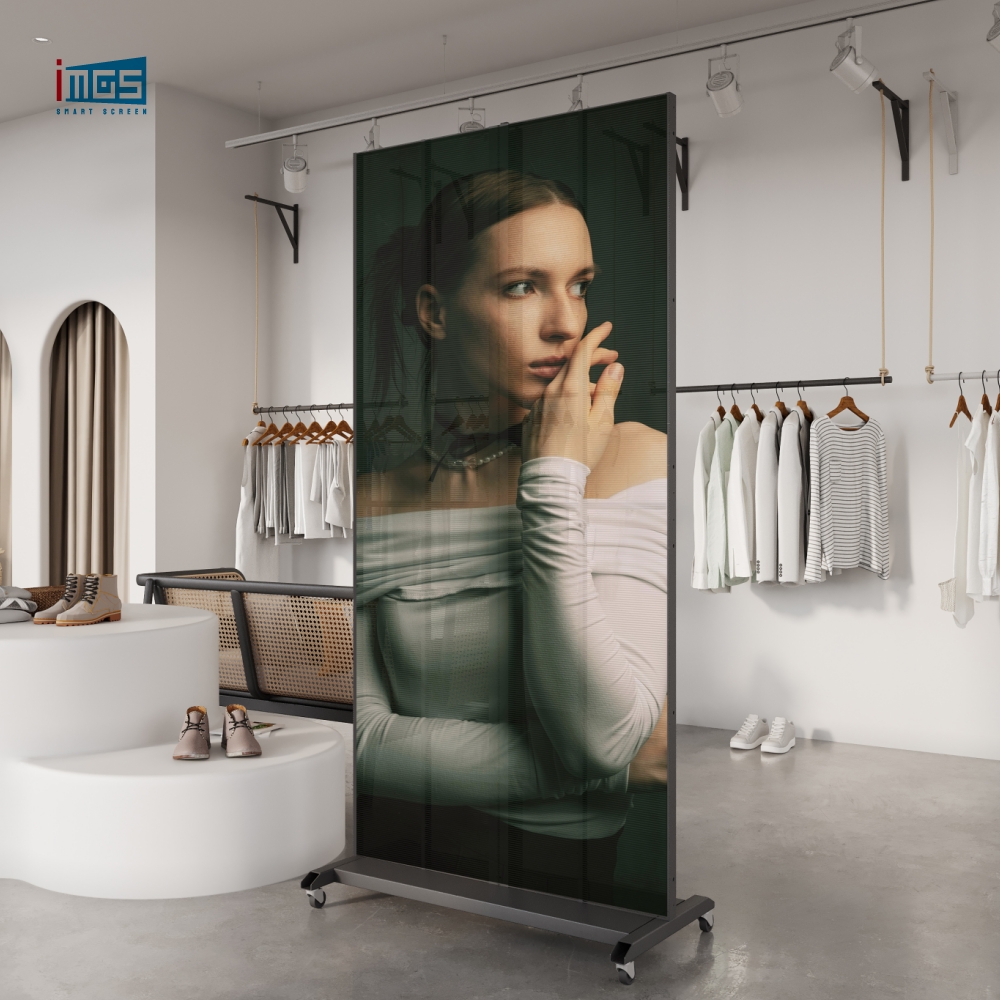
| Product: Interactive Advertising Display (75") Touch-enabled interactive advertising display for high-traffic retail and brand activation. Custom OS and branding supported. |
| Product: Floor Standing Kiosk Freestanding digital signage kiosk for wayfinding, self-service, and promotional display. IP-rated enclosure options available. |
Why System Integrators and Brand Owners Source From iMGS
As a digital signage manufacturer with 85+ patent certificates and 400+ completed deployments across 20+ countries, iMGS sits at the factory level of the supply chain — not the distribution layer. That means no middleman margin, no secondary QC dependency, and direct communication with the engineers who built the unit.
When system integrators compare iMGS against other digital signage manufacturer options, the difference usually comes down to two things: batch consistency data that is available on request, and a post-sale contact who actually responds. Both are standard at iMGS, not upsells. Need an interactive advertising display with custom touch firmware? That is a standard configuration request, not a special project.
For projects involving interactive advertising display hardware — touch-enabled screens, high-brightness units for retail windows, or dual-sided mall displays — iMGS engineers can scope custom configurations within 48 hours. Each interactive advertising display order includes full function testing before shipment, with test records available on request.
OEM and ODM support covers logo, enclosure colour, firmware, and size. Custom interactive advertising display configurations — including touch calibration and branded UI — are scoped within two business days. Bulk orders ship from a 6,000m² production facility with 100% pre-shipment function testing on every unit.
On pricing: factory-direct means no distributor markup. The quote you receive reflects actual production cost plus margin — not three layers of resale. On quality: every unit that leaves the Xiamen facility has passed a full function test, not a sample check. If a unit fails within the warranty period, iMGS handles replacement directly. No third-party claims process, no credit-note substitution. On interactive advertising display orders specifically: touch calibration and firmware are tested as part of the standard pre-shipment check — not billed separately. On lead time: standard production runs 4–6 weeks from PO confirmation. Sample units are available within 7 business days for most product lines.
Before You Commit to Any Digital Signage Manufacturer: A Quick Checklist
Run through this before signing a PO with any supplier — including iMGS. If a digital signage manufacturer cannot answer yes to all seven, factor that into your decision.
☐ Have you received a factory audit report or third-party production certification?
☐ Can the supplier provide batch QC data from a recent order — not just sample approval?
☐ Is the warranty replacement unit-for-unit, and what is the stated RMA turnaround time?
☐ Does the digital signage manufacturer support OEM packaging and custom firmware if your project requires it?
☐ Has the supplier shipped to your country before, with documented regional certification (FCC, CE, RoHS)?
☐ What was the worst-case lead time in the past twelve months — not the catalogue figure?
☐ For interactive advertising display orders: is touch calibration and custom firmware included, or an extra charge?
Want to run through this list with iMGS directly? Send your specs and quantity and we will come back within 24 hours.
Ready to Spec Your Next Deployment? Send us your screen size, quantity, and installation environment — whether you need a digital signage manufacturer for a 50-unit retail rollout or a custom interactive advertising display for a flagship store. Our engineering team replies within 24 hours on business days. No commitment required. �� irenepan@fj-imgs.com �� +86-18850151946 |