


6,000m² Factory | 400+ Classic Cases | 85+ Patents | 1,000+ Projects Worldwide |
A screen that shows the same ad loop all day is leaving money on the table. In 2025, retailers gaining ground are using AI digital signage to serve different content to different audiences at different times — automatically.
AI digital signage is a hardware-plus-software system, and the hardware is where most buyers underestimate the requirements. A camera-equipped display with 8GB RAM can run audience detection, real-time content switching, and remote fleet management simultaneously. A budget panel with 2GB RAM cannot. Choosing the right digital signage manufacturer for AI deployments matters more than the AI software itself — hardware that cannot run the workload is the most common reason deployments fail.
This guide covers what AI digital signage does in practice, which hardware specifications support it, which retail segments are adopting it fastest, and how to evaluate a digital signage manufacturer before placing an order.
$6.8B | Projected global AI digital signage market size by 2028, growing at 14.2% CAGR (MarketsandMarkets, 2024) |
73% | of retailers using digital displays plan to add AI-driven content personalization within 2 years (Deloitte Digital Retail Survey, 2024) |
32% | Average increase in ad recall when content is dynamically matched to audience demographics vs. static loops (Nielsen, 2023) |
1. What AI Digital Signage Actually Does
The term covers several distinct capabilities — each with different hardware requirements and ROI timelines.
Audience Detection and Demographic Analysis
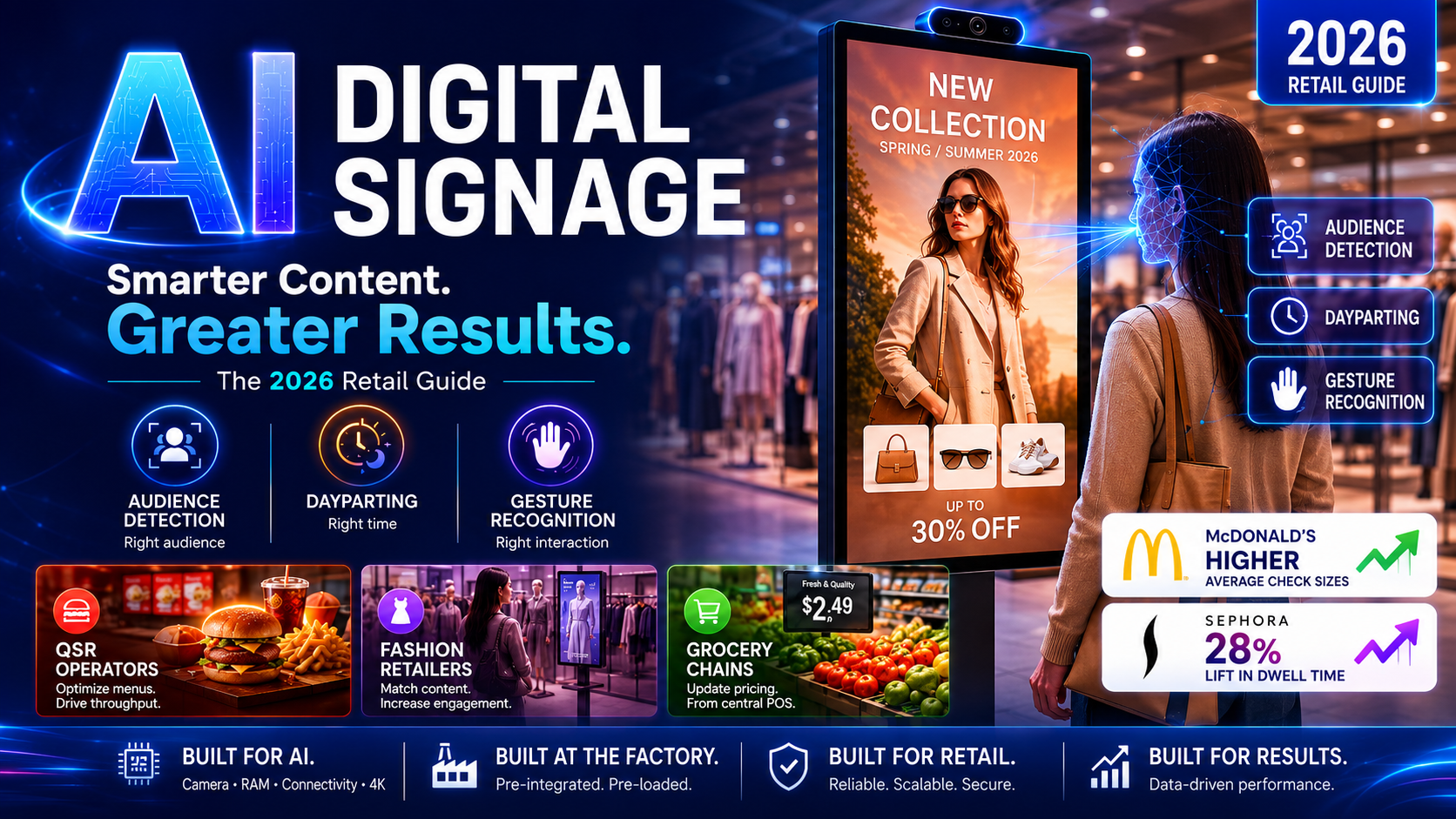
A camera on or behind the display captures video of people passing or stopping in front of the screen. An on-device AI model estimates age range, gender, and dwell time without storing personally identifiable data. The AI digital signage system then selects content matching the detected demographic.
A fashion retailer using this might show menswear content when male shoppers are detected and switch to womenswear when the demographic shifts — in real time, no staff involvement required.
Dayparting and Contextual Triggers
AI digital signage systems trigger content changes based on time of day, weather data, stock levels, or promotional calendars. A QSR chain switches from breakfast to lunch menus automatically at 10:30 AM. A grocery store pushes umbrella promotions when the weather API reports rain.
This integration does not require a camera. It runs on scheduling logic connected to external data sources. The hardware requirement is reliable connectivity — WiFi or RJ45 — and enough RAM to run the CMS alongside the media player.
Interaction and Gesture Recognition
More advanced AI digital signage uses depth sensors or cameras to detect gestures or proximity without physical contact. A shopper approaching the screen triggers a welcome animation; raising a hand changes content. These features require significant processing power and are typically deployed on touch screen kiosk hardware.
2. Hardware Requirements for AI Features
AI digital signage places real demands on display hardware. Buying underpowered units is the most common and most expensive mistake in AI display procurement.
Camera
Any AI audience detection feature requires a camera. Some manufacturers build cameras directly into the bezel (typically 2MP to 8MP); others offer USB-mounted modules. Confirm whether the camera is included in the base price or sold separately before finalizing specifications.
RAM and Processing Power
• 2GB RAM: sufficient for standard video loops. Not adequate for running AI inference alongside a CMS.
• 4GB RAM: handles audience analytics apps and standard content management simultaneously.
• 8GB RAM: required for real-time AI inference, multi-app environments, or integration with cloud dashboards that stream live data.
The iMGS F-Series 55" — produced by a direct digital signage manufacturer with in-house engineering — supports RAM configurations from 2GB to 8GB and storage from 32GB to 256GB. For AI digital signage deployments, 4GB or 8GB is the appropriate starting point.
Connectivity
AI content systems pulling from external data sources — weather APIs, POS systems, loyalty platforms — require stable connectivity. WiFi works in most retail environments; wired RJ45 is preferable for flagship locations where latency matters. The iMGS F-Series supports both, with an optional 4G module for sites without fixed network infrastructure.
Resolution
AI-generated content — particularly photo-realistic imagery from generative AI tools — benefits from higher resolution. A 4K panel (2160x3840) at 55" renders AI visuals without compression artifacts at close range. For locations where viewers approach within 1 to 2 metres, 4K is worth specifying.
3. Retail Segments Adopting AI Digital Signage Fastest
Quick Service Restaurants
QSR operators were early adopters of dynamic digital menu boards and are now layering AI on top. Drive-through and front-counter AI digital signage systems analyze queue length, time of day, and weather to recommend items with the highest margin and fastest prep time — throughput optimization, not personalization.
The hardware of choice for QSR front-of-house combines ceiling mounted digital menu board above the counter with floor standing digital signage at queue entry points and promotional zones.
Fashion and Apparel Retail
Fashion retailers use AI digital signage for audience-matched lookbook content. Camera detects demographic profile, CMS serves pre-loaded content. No cloud processing needed if the AI model runs on-device. Sourcing from a direct digital signage manufacturer means camera integration is factory-configured and tested before the unit ships.
Large-format interactive advertising display units at store entry points and fitting room corridors are the primary deployment locations for this use case.
Grocery and Supermarket
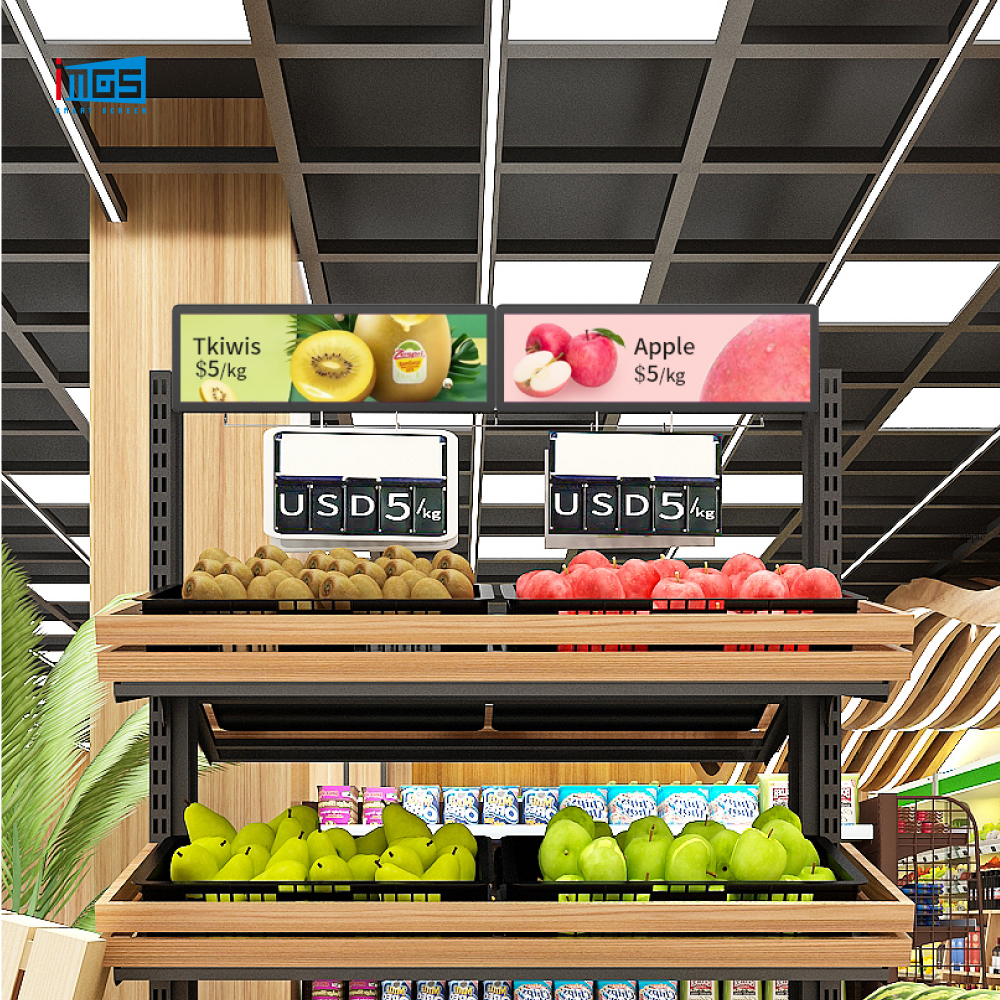
Shelf-level AI digital signage in grocery — mounted on gondola shelving — is a fast-growing segment. Displays show pricing, promotions, and nutritional information updated from a central POS system. AI handles content prioritization: which products to feature based on margin targets and inventory levels.
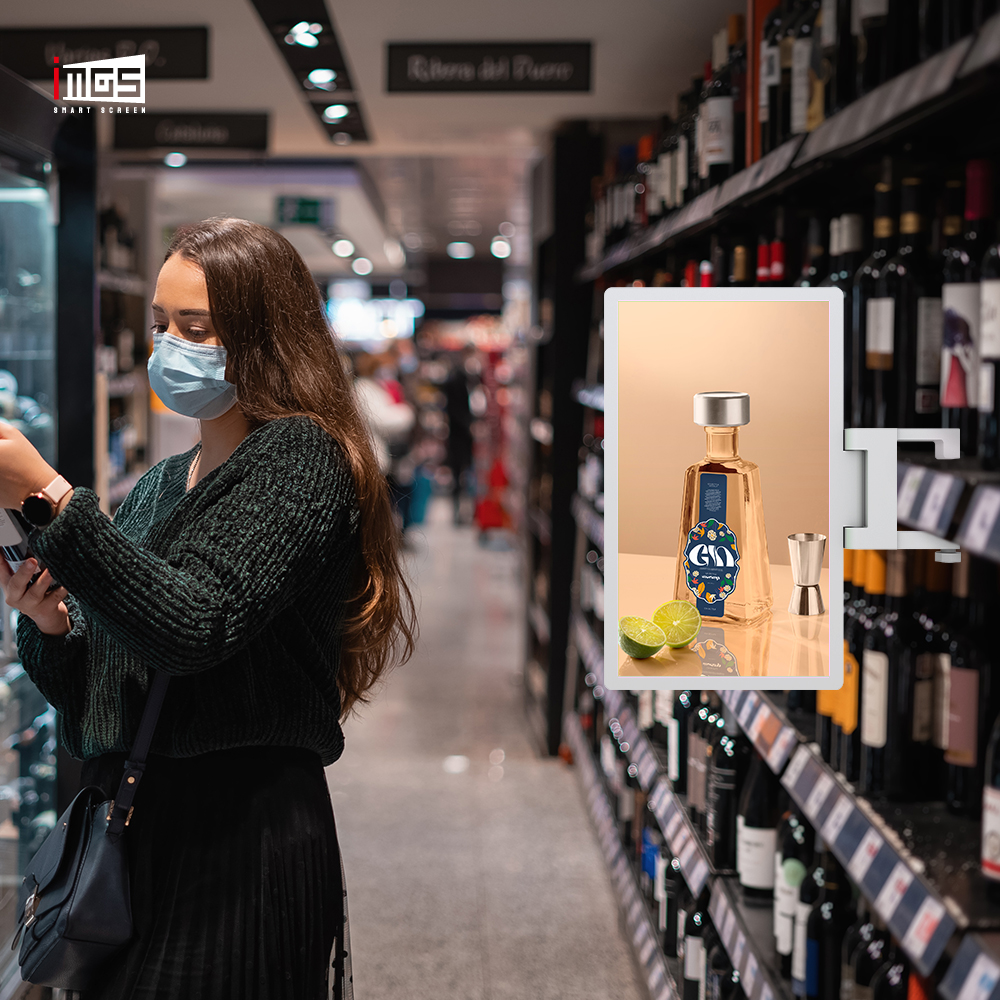
iMGS shelf screens are designed for gondola and refrigerator door mounting, with slim profiles that do not obstruct product visibility.
4. Brand Case Studies
McDonald's: AI Menu Board Optimization
McDonald's rolled out AI-driven digital menu boards across thousands of locations in 2023 and 2024. The system integrates weather data, time of day, and historical sales patterns to surface menu items most likely to be ordered at that moment. Locations with AI digital signage showed a measurable increase in average check size compared to static menu board sites, per McDonald's published earnings commentary. The AI changes content hierarchy and prominence — not prices.
The hardware requirement: high-brightness ceiling-mounted displays sourced from a reliable digital signage manufacturer, with stable network connectivity and sufficient RAM to run the AI scheduling layer alongside the standard media player.
Sephora: Audience-Matched Beauty Content
Sephora deployed AI digital signage in select US and European stores, matching displayed beauty content to the demographic profile detected by on-device cameras — no cloud upload of customer images. The result was a 28% increase in content engagement (measured by dwell time) compared to static promotional loops. The system also reduced the volume of creative assets needed per location, since dynamic content selection replaced manual scheduling by store staff.
5. Choosing the Right Digital Signage Manufacturer for AI Deployments
AI digital signage deployments fail more often at the hardware procurement stage than at the software integration stage. Buyers specify underpowered panels, order from distributors who cannot support custom configurations, and discover compatibility problems after installation.
Working directly with a digital signage manufacturer solves this. A direct digital signage manufacturer can configure RAM, camera module, and connectivity at the factory level. A distributor can only sell current stock.
iMGS is a direct digital signage manufacturer in Xiamen, China, with a 6,000m2 production facility. The F-Series 55" is configurable with camera modules, RAM from 2GB to 8GB, and storage up to 256GB. Every unit undergoes 100% factory testing. OEM and ODM are available for chain retail deployments needing custom enclosures or pre-loaded software. As a digital signage manufacturer with 85+ patents, iMGS supports technical customization that distributor-sourced hardware cannot.
Beyond the F-Series, iMGS as a full-range digital signage manufacturer also supplies LED displays and desktop digital signage for consistent hardware across multiple format types.
iMGS F-Series 55" — AI-Ready Floor Standing Display Camera Optional | 4GB / 8GB RAM | 1080p or 4K | Android | WiFi / RJ45 / 4G | 500 nits | Touch Optional |
iMGS Interactive Advertising Display — 75" Touch Panel | Camera Ready | High RAM Config Available | Ideal for Gesture and Audience Detection Use Cases |
6. Buyer Checklist for AI-Ready Digital Signage Hardware
1. Confirm camera: built-in vs. external USB — check if included or priced separately
2. Specify RAM: 4GB minimum for audience analytics, 8GB for real-time AI inference
3. Confirm connectivity: WiFi + RJ45 standard, 4G for sites without fixed network
4. Specify resolution: 4K for close-range AI-generated content, 1080p for standard retail
5. Verify the digital signage manufacturer supports custom hardware config — not just stock units
6. Ask about OEM/ODM for branded retail chain deployments
7. Confirm certifications: CE, FCC, UL, ISO9001 for US/EU commercial compliance
8. Request a pilot unit from the digital signage manufacturer before committing to fleet volume
9. Confirm the digital signage manufacturer provides post-sale engineering support for AI integration
Ready to Deploy AI Digital Signage? Talk to our factory team. Camera-ready hardware, OEM/ODM, 100% tested before shipment. Email: irenepan@fj-imgs.com | +86-18850151946 |