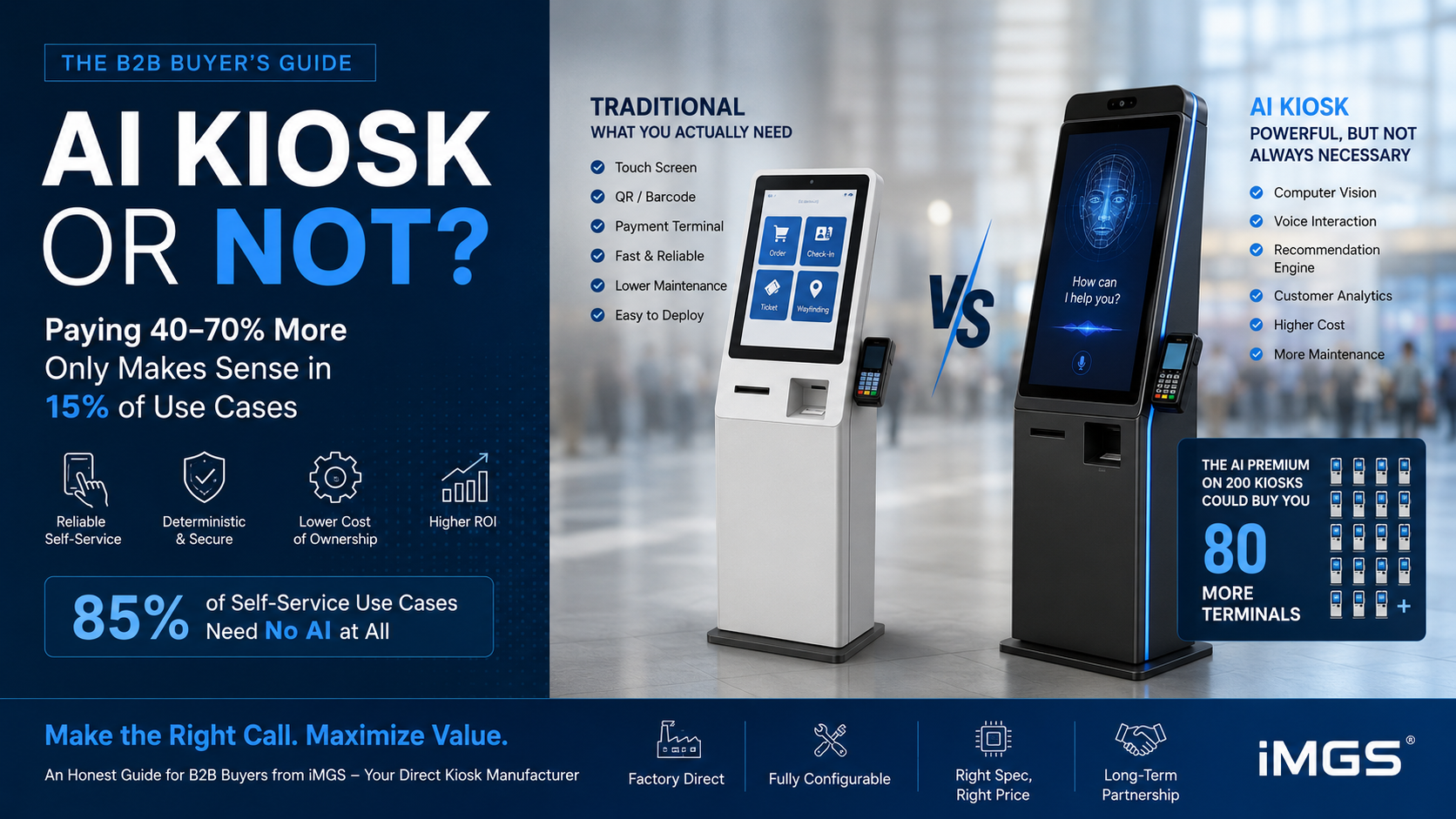
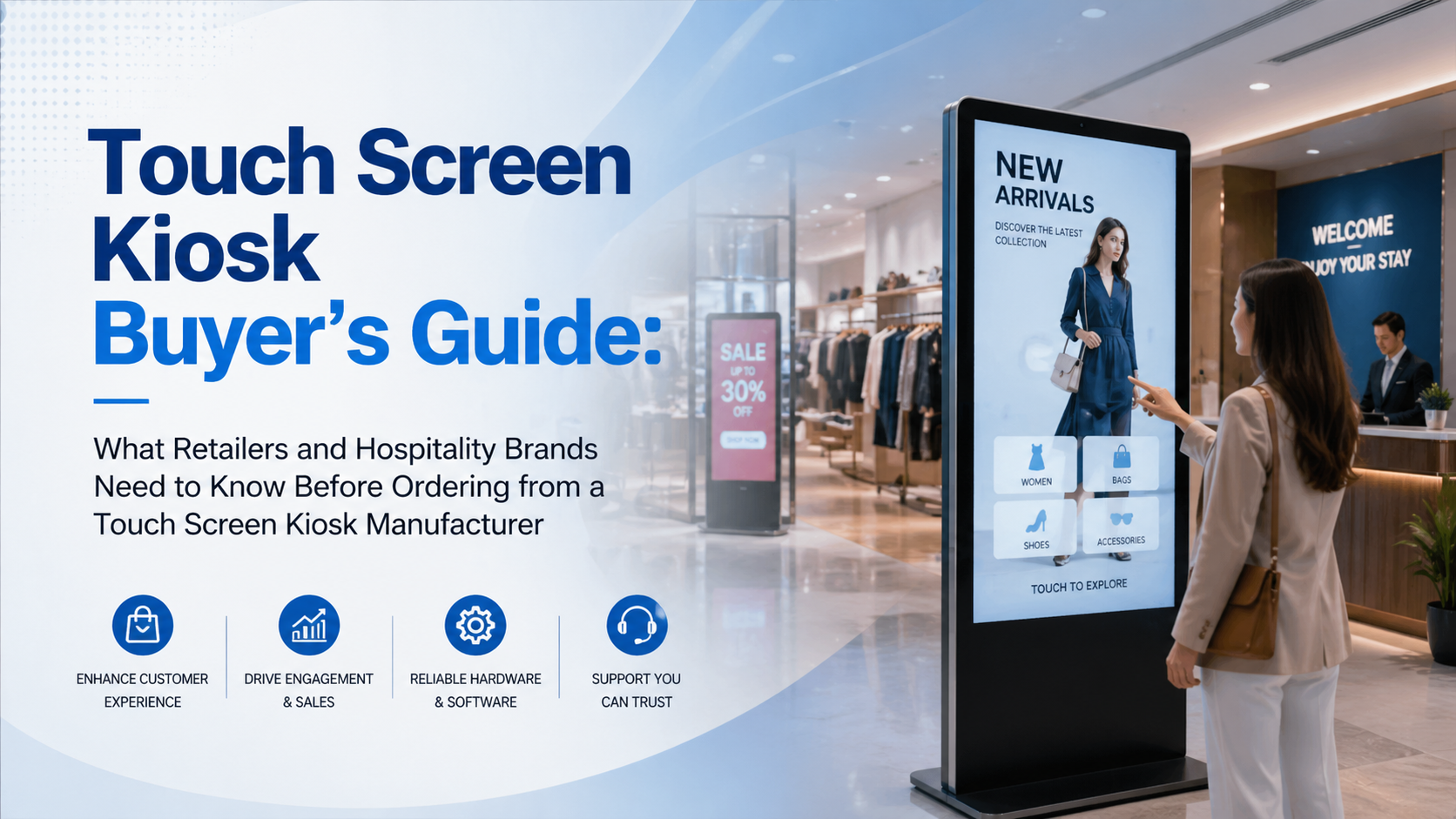
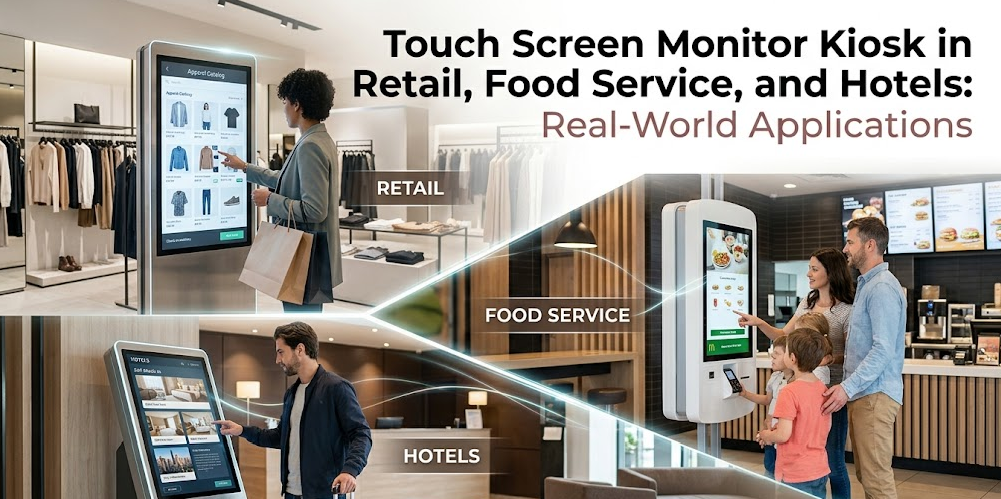
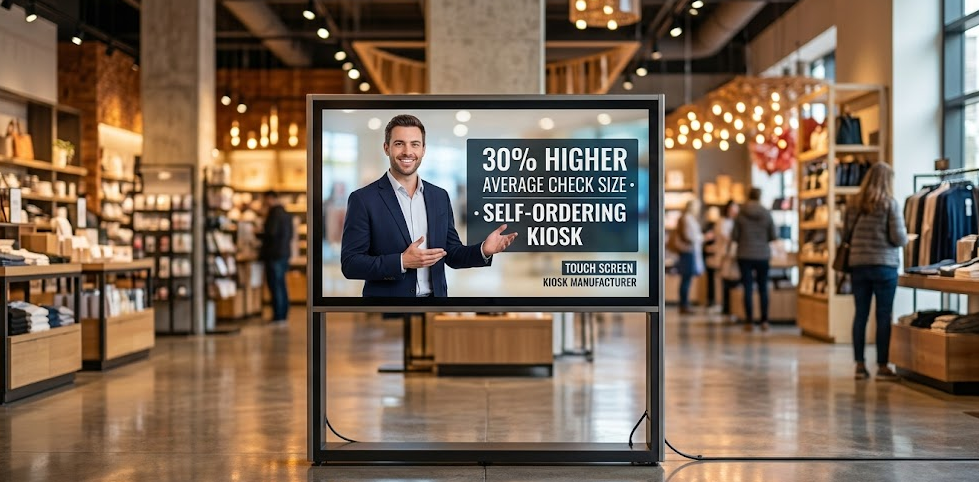
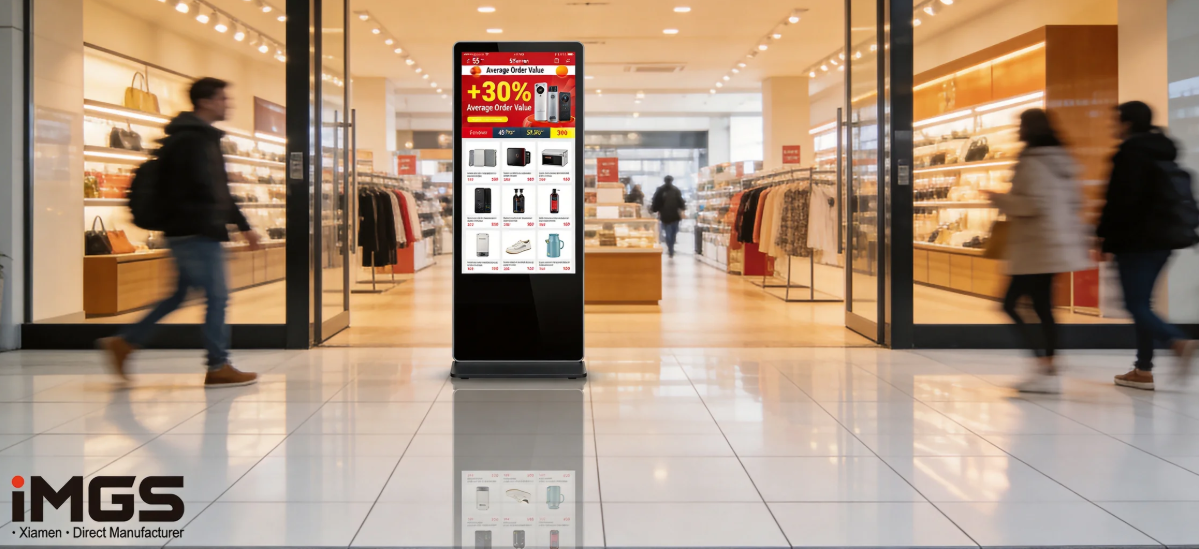
Every supplier is pushing "AI kiosks" right now, but for B2B buyers the real question isn't whether AI is impressive — it's whether the 40–70% price premium is justified for your specific use case. This guide draws that line clearly. It explains what a traditional touch screen kiosk actually does (reliable, deterministic self-service for ordering, check-in, ticketing, and wayfinding), what genuinely makes a kiosk "AI" (computer vision, voice interaction, recommendation engines), and lays out a side-by-side comparison across cost, RAM, camera, maintenance, privacy compliance, and reliability. The core message is contrarian and buyer-friendly: roughly 85% of self-service use cases need no AI at all, and over-specifying is a common, costly mistake — the AI premium spread across 200 ticketing kiosks could instead fund 80 additional terminals. AI earns its cost only in narrow scenarios like personalized retail, high-value upsell, and customer analytics. The article closes with a 8-point buyer decision framework and notes that sourcing from a direct manufacturer lets buyers configure the exact spec — traditional or AI — without paying for unused features. This honest-advisor angle builds more trust with B2B buyers than a typical promotional piece, while reinforcing iMGS's positioning as a knowledgeable factory partner.
2026-06-04
More